9 Books That Actually Get You Off the Couch (From Someone Who Read Them All While Procrastinating)
Heads up: some links below are affiliate links. At no extra cost to you, I may earn a small commission if you buy through them.
I was three chapters into my fourth book about taking action when I realized I'd spent 11 hours that week reading about productivity and exactly zero hours on the project I was supposedly preparing for. The irony wasn't lost on me.
I've now read every major book in this category — some twice — and I can tell you which ones actually changed my behavior and which ones just made me feel temporarily motivated before I went right back to refreshing Twitter.
This list covers different types of stuck, so wherever you're at, there's something here that fits.
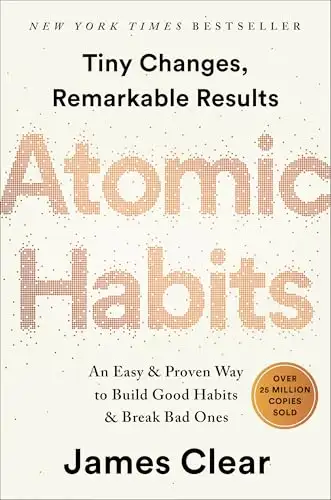
Atomic Habits: An Easy & Proven Way to Build Good Habits & Break Bad Ones
I'm not gonna lie — I was skeptical of this one because of how often it gets recommended. But Clear does something different from most habit books: he focuses on making the desired action the path of least resistance. Not motivation.
Not discipline. Just... friction. Remove friction from the good stuff, add friction to the bad stuff.
It sounds almost too simple, but I've used his "habit stacking" technique for 18 months now and it's the only productivity concept that actually survived contact with my real life.
One thing to know: This is a how-to book, not an emotional wake-up call. If you're looking for inspiration or deep philosophical exploration, it'll feel clinical.
- The Four Laws of Behavior Change (make it obvious, attractive, easy, satisfying) as a framework for building or breaking any habit
- Identity-based habits: deciding who you want to be, then proving it to yourself with small wins
- How to design your environment so the right action is the default, not the struggle
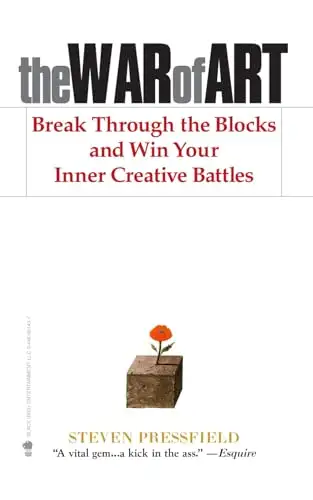
The War of Art: Break Through the Blocks and Win Your Inner Creative Battles
This book hit me like a punch to the chest. Pressfield's central idea is simple: there's a force called Resistance that shows up every time you try to do meaningful work, and your job is to sit down and do the work anyway. That's it.
No systems. No frameworks. Just a relentless call to stop making excuses and start. It's only 190 pages. You can finish it in an afternoon. And then you'll either feel called out or pissed off — probably both.
One thing to know: If you want research citations and behavioral science, this will feel more like a manifesto than a guide.
- A name for the invisible force that makes you procrastinate on meaningful work: Resistance
- The amateur vs. professional distinction: professionals show up regardless of mood
- Permission to expect fear and self-doubt as normal, not as reasons to stop
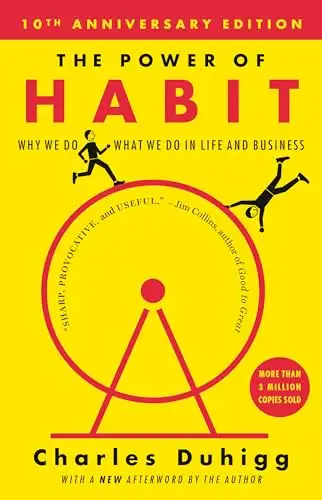
The Power of Habit: Why We Do What We Do in Life and Business
Duhigg's book is less about what to do and more about why habits work the way they do. He uses narrative case studies — from Alcoa's safety transformation to how Target predicts pregnancies — to illustrate the cue-routine-reward loop.
It's journalism meets behavioral science. I found myself actually interested rather than just dutifully highlighting.
The challenge is you'll need to translate the examples to your own life, but if you're the type who needs to understand something before you'll implement it, this is your book.
One thing to know: It's heavier on stories than step-by-step instructions, so expect to do some work applying the principles.
- The habit loop framework: identify your cue, keep the reward, change the routine
- The concept of "keystone habits" that trigger positive cascades in other areas
- How to become aware of triggers and cravings so you can redesign them intentionally
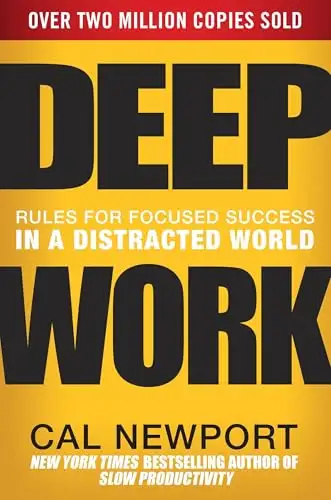
Deep Work: Rules for Focused Success in a Distracted World
If your problem is that you spend all day "working" but never actually making progress on the things that matter... yeah. Newport wrote this book for you.
His argument is that deep, focused work is becoming rare and valuable, and he gives you specific rules for protecting your attention. This isn't motivation — it's scheduling. It's boundaries.
It's treating your deep work time like a non-negotiable appointment. I started blocking 90-minute deep work sessions after reading this, and those blocks are when 80% of my actual output happens now.
One thing to know: This is specifically about work execution. If your action problem is emotional — hard conversations, life changes — this won't address that directly.
- How to schedule and protect blocks of undistracted focus time
- Strategies for eliminating shallow work that feels productive but isn't
- Rituals for making the start of deep work sessions automatic
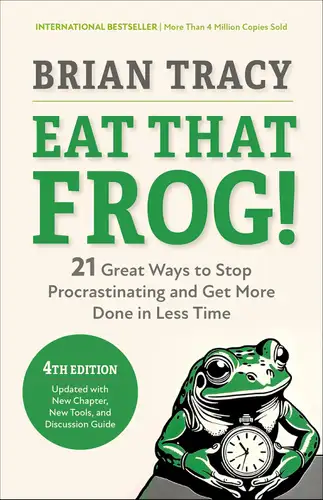
Eat That Frog!: 21 Great Ways to Stop Procrastinating and Get More Done in Less Time
The whole book is basically: figure out your most important task, do it first, repeat. Tracy calls it "eating your frog." It's not revolutionary. It's not sophisticated.
But if you're buying a gift for someone who needs help and you don't want to overwhelm them, this is the one. At 144 pages, it respects your time. The audiobook is perfect for a commute.
It won't change your life philosophy, but it might change your Tuesday.
One thing to know: If your procrastination is rooted in fear, identity, or deeper psychological stuff, this tactical focus will feel too surface-level.
- A simple daily practice: identify your "frog" and do it before anything else
- How to break overwhelming goals into immediately actionable steps
- Prioritization frameworks to stop spending time on low-value busywork
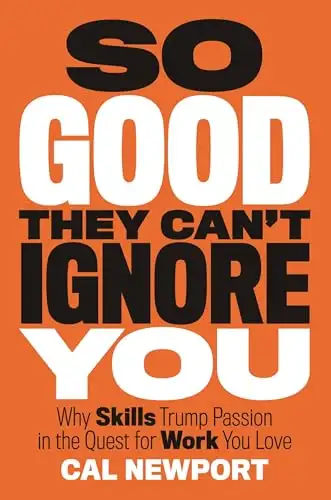
So Good They Can't Ignore You: Why Skills Trump Passion in the Quest for Work You Love
I WISH I'd read this in my twenties. Newport's argument is that "follow your passion" is terrible advice, and that meaningful work comes from building rare and valuable skills — not from finding some pre-existing calling.
If you've been paralyzed by career indecision, waiting for clarity before you commit to anything... this book might unstick you. It's cool-headed, contrarian, and backed by actual research on career satisfaction.
One thing to know: This is specifically about career and work. It won't address life changes outside that domain.
- Why waiting to "find your passion" keeps you stuck instead of moving you forward
- The concept of "career capital" and how to build leverage for autonomy and meaning
- A craftsman mindset: focus on value created, not feelings in the moment

Can't Hurt Me: Master Your Mind and Defy the Odds
Hold on. I know what you're thinking. "Isn't this the guy who runs ultramarathons and tells everyone to stop being soft?" Yes. And honestly, if you'd told me I'd recommend this book, I would've rolled my eyes.
But the audiobook version is something else — it's basically a podcast with extended commentary, and it's IMPOSSIBLE to listen to this guy's story and then claim you can't get off the couch.
Fair warning: the intensity isn't for everyone, and the language is... colorful.
One thing to know: If you need a gentle, therapeutic approach, this isn't it. The tone is relentless and may feel excessive.
- The "accountability mirror" technique for confronting your own excuses directly
- How to "callus your mind" by voluntarily doing hard things repeatedly
- Breaking overwhelming goals into smaller steps and tracking them obsessively
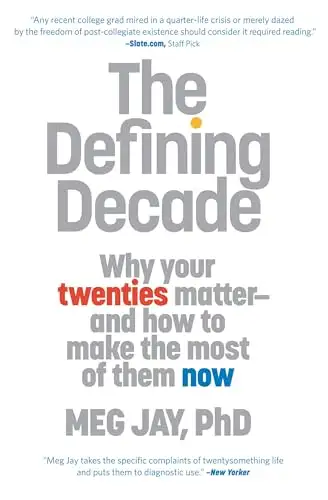
The Defining Decade: Why Your Twenties Matter—and How to Make the Most of Them Now
If you're in your twenties and this book doesn't make you uncomfortable, you weren't paying attention.
Jay is a clinical psychologist who got tired of watching smart young people waste their most formative decade on "finding themselves" instead of making decisions. The tone is empathetic but direct.
She's not yelling at you — she's telling you the truth that no one else will. If you're buying for someone in their twenties who has potential but isn't acting on it, this is the gift.
One thing to know: If you're well past your twenties, some examples will feel less relevant, though the principles still apply.
- Why your twenties are a critical window for building "identity capital" in work and relationships
- How to stop treating your twenties as a throwaway decade and start making intentional moves
- The real cost of avoiding adult decisions in love and career
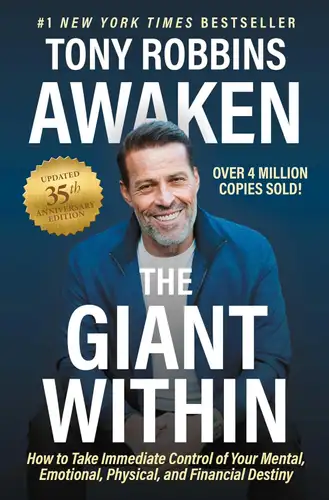
Awaken the Giant Within: How to Take Immediate Control of Your Mental, Emotional, Physical and Financial Destiny!
Ok, I realize I've spent this whole article being skeptical of motivational hype, and now I'm recommending Tony Robbins.
Here's the thing: underneath the exclamation points and the intensity, there ARE actual frameworks here — for changing beliefs, making decisions, and building standards for yourself.
This book is 544 pages and it's from 1991 and it WILL feel over-the-top if you're allergic to that style. But if you've tried the calm, rational approach and it didn't light a fire? Maybe you need something louder.
One thing to know: If you strongly dislike motivational tone or long books, this will be more irritating than helpful.
- How to use compelling outcomes and strong reasons to drive action instead of vague goals
- Techniques for changing the meaning you attach to events that trigger avoidance
- Methods for linking new habits to strong emotional leverage so they stick
Why do I feel motivated while reading but go right back to doing nothing afterward — and is there a book that actually addresses this?
That's literally what Atomic Habits (#1) is built for. It doesn't try to motivate you — it shows you how to remove friction so the action happens even when motivation doesn't.
If I've already read the popular books like Atomic Habits and they didn't work, does that mean books can't help me?
Maybe. Or maybe you need a different angle. Try The War of Art (#2) — it's less "how to build habits" and more "why you keep sabotaging yourself." Different problem, different book.
Is my inability to take action a discipline problem, a fear problem, or something else entirely — and which book helps me figure that out?
Start with The War of Art (#2) if you suspect it's fear or avoidance. Start with The Power of Habit (#3) if you think it's just poor system design. You'll know which resonates.
Are there books for people whose procrastination has already caused real damage — relationships, money, career — not just mild annoyance?
Can't Hurt Me (#7) is for people who've hit bottom and need intensity. The Defining Decade (#8) is for people who are watching opportunities slip away. Both are honest about the stakes.
What's the one book to start with if I only have the attention span to try one more time?
Atomic Habits (#1). It's the most practical, the most immediately applicable, and it works even when life is chaotic. If it doesn't stick, nothing will.
You don't need another book. You need the right book — and then you need to actually do something with it. I've given you nine options. I've told you which ones I think are oversold and which ones actually changed my behavior.
The rest is on you.
KEEP MOVING FORWARD.
More Books on Self-Growth
- 10 Books for Introverts That Actually Help (Not Just Validation)
- 10 Books That Actually Help Overthinkers (From Someone Who's Read Too Many That Didn't)
- I Spent $847 on Critical Thinking Books — These 10 Were Worth It