10 Books for Introverts That Actually Help (Not Just Validation)
Heads up: some links below are affiliate links. At no extra cost to you, I may earn a small commission if you buy through them.
I was sitting in my car after a networking event, engine off, just... recovering. Not from anything bad. The event was fine. I just needed 20 minutes of silence before I could drive home.
That's when I realized the three "introvert books" on my nightstand hadn't actually changed anything — they just made me feel temporarily understood while reading them. So I went looking for books that would actually DO something.
I've read all ten of these, some twice. And I built this list knowing you might be a skeptic who's burned through self-help before, or a professional watching louder people get promoted, or someone whose partner thinks you're broken.
You'll find your fit here.
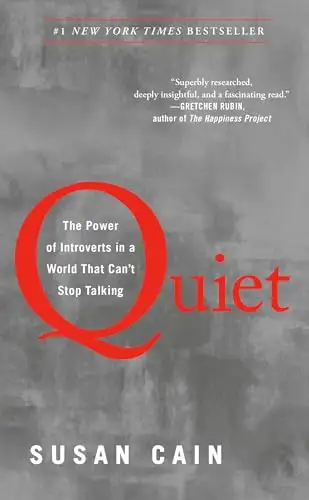
Quiet: The Power of Introverts in a World That Can't Stop Talking
I know what you're thinking — "Everyone already recommends this one." Yeah. Because it's actually good. Cain spent seven years researching this, and it shows.
She synthesizes psychology, neuroscience, and cultural history to make a case that introversion isn't a flaw to overcome — it's a different operating system with real advantages. The research on open-plan offices alone is worth the read.
But here's what actually changed things for me: it gave me WORDS. Suddenly I could explain to my wife why I needed 30 minutes alone after her family left without sounding like I hated her family.
One thing to know: If you want a highly tactical, workbook-style program with daily exercises and scripts, this primarily conceptual and narrative book may feel too high-level.
- Introversion has measurable biological bases, including differences in how you respond to stimulation
- Open-plan offices and brainstorming-heavy cultures systematically undervalue what introverts contribute
- Framing introversion as a strength helps you advocate for your needs without pathologizing yourself
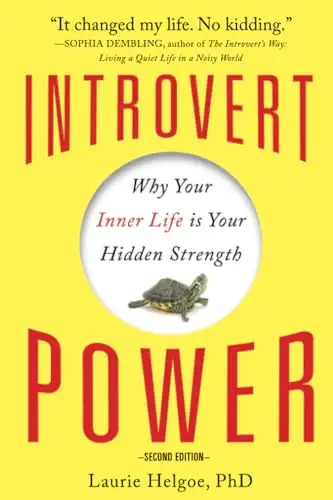
Introvert Power: Why Your Inner Life Is Your Hidden Strength
Helgoe is a clinical psychologist, and you can tell. This isn't another book that just pats you on the head and says "it's okay to be quiet."
She blends research with practical exercises that actually help you restructure your time, commitments, and environment.
The sections on relationships hit hard — she addresses the friction that builds when your partner thinks you don't want to spend time with them when really you just... need to recover from existing.
There's a chapter on "The Introvert's Wish List" that I keep coming back to.
One thing to know: If you want hard-core academic citations on every claim, the mix of research with personal and clinical anecdotes may feel less rigorous than desired.
- Building a satisfying life requires intentionally structuring time and social commitments around your need for solitude
- Common conflict patterns in relationships can be reframed with practical language that doesn't sound defensive
- Your introvert strengths — listening, observation, independent thinking — can lead to unconventional but sustainable success
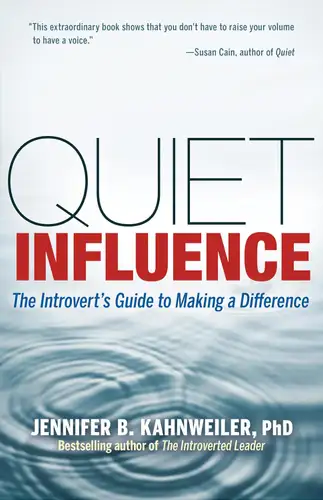
Quiet Influence: The Introvert's Guide to Making a Difference
Ok, I'll be honest — when I first saw this title I thought it was gonna be another "introverts are secretly powerful!" fluff piece. NOPE. Kahnweiler is an executive coach who's spent years working specifically with introverted leaders.
The book gives you six actual practices for exerting influence without becoming a fake extrovert: purposeful preparation, engaged listening, targeted one-on-one conversations.
There's stuff here about navigating meetings, presentations, and office politics that I wish I'd had ten years ago.
One thing to know: If you're not dealing with organizational life — corporate, non-profit, or similar — and mainly care about personal or artistic pursuits, the corporate examples may feel irrelevant.
- You can exert strong influence through preparation, listening, and strategic one-on-ones rather than loud charisma
- Strategic use of solitude actually improves decision-making in environments that reward quick, superficial input
- Specific techniques like planning speaking moments and written follow-ups let you navigate meetings without draining yourself
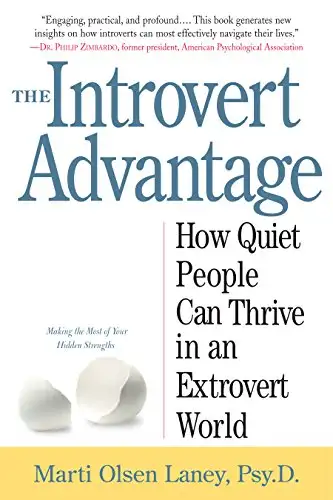
The Introvert Advantage: How Quiet People Can Thrive in an Extrovert World
This one's older (2002) and the writing style is more clinical than contemporary.
But here's why it's still on this list: Laney explains the neurochemical basis of introversion — why we literally process stimulation differently — and then gives you a manual's worth of coping strategies. Not theory.
SPECIFIC scripts for social events, phone calls, small talk. If you're the kind of person who likes checklists and concrete scenarios, this delivers where more narrative books don't.
One thing to know: If you're looking for cutting-edge research or contemporary cultural analysis, some science and cultural references may feel dated.
- Introverts process stimulation differently, making energy management through breaks and boundaries central to wellbeing
- Specific scripts can make social events, phone calls, and small talk less draining and more predictable
- Understanding introvert traits helps partners and parents avoid misinterpreting quietness as rejection
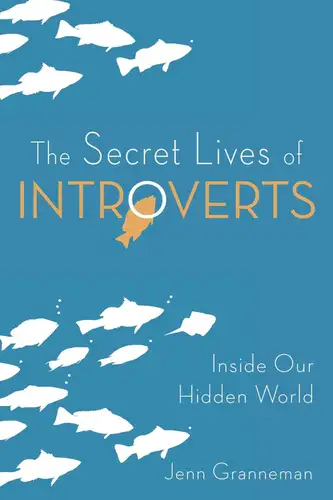
The Secret Lives of Introverts: Inside Our Hidden World
Granneman founded IntrovertDear, and this book reads like the best of that community distilled. She uses surveys, interviews, and personal stories to map how introverts actually live — dating, working, just... existing.
It's explicitly affirming without being saccharine. This is the book I'd give to a partner or parent who genuinely wants to understand but might be put off by something too clinical.
The tone says "here's how we work" rather than "here's what's wrong with me."
One thing to know: If you strongly prefer heavily cited, academic-level research and minimal anecdotes, the narrative and community-driven style may feel too informal.
- Introverts often need more downtime than loved ones realize, and you can communicate this without guilt
- Relationship misunderstandings frequently come from energy differences, not lack of love
- Creating an introvert-friendly life involves small, cumulative choices around work, social calendars, and home environment
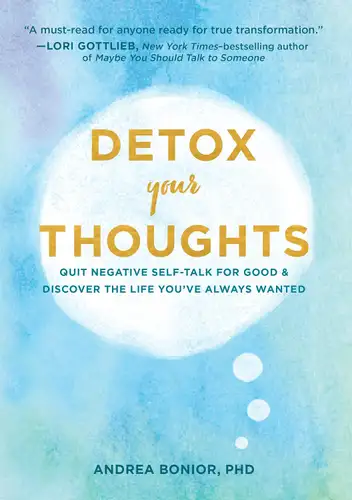
Detox Your Thoughts: Quit Negative Self-Talk for Good and Discover the Life You've Always Wanted
Hold on — this isn't technically an "introvert book." But stick with me.
Bonior is a licensed clinical psychologist, and this book targets the thinking patterns that plague many introverts: rumination, catastrophizing, replaying conversations at 2 AM. It's structured as skills training using cognitive-behavioral techniques.
Not inspiration. Not "just think positive." Actual exercises for interrupting the spiral. If your problem is less "I need solitude" and more "I can't stop analyzing that thing I said three days ago," this is your book.
One thing to know: If you specifically want a book centered on introversion and social energy rather than general cognitive habits, this will feel more like a broad CBT manual.
- Identifying distorted thought patterns like all-or-nothing thinking is the first step to weakening their impact
- Replacing automatic negative thoughts with balanced alternatives reduces anxiety and social avoidance
- Brief, repeatable practices can interrupt rumination spirals after social or performance situations
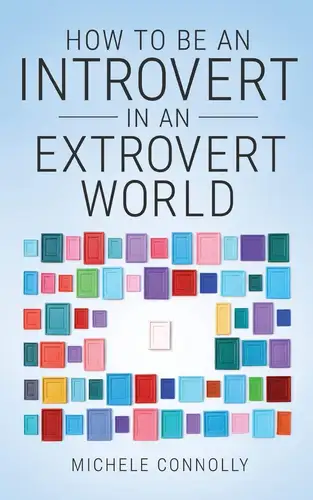
How to Be an Introvert in an Extrovert World: Am I Weird or Just Different?
This one's 208 pages of concise, practical tips. No fluff. No lengthy theoretical frameworks. Connolly breaks everything into short, digestible segments — no charts or worksheets to wade through.
The tone is light, sometimes funny, and never preachy. If you want something that gives you usable ideas in small bursts without requiring a notebook, this is it. Not the deepest book on the list, but sometimes you don't need deep.
One thing to know: If you're looking for deep theoretical frameworks or heavy scientific grounding, the pragmatic and conversational style may feel too lightweight.
- Recognizing and accepting introvert needs reduces the urge to apologize for saying no
- Simple boundary-setting phrases can make declining invitations less awkward
- Designing routines around predictable solitude dramatically increases daily satisfaction
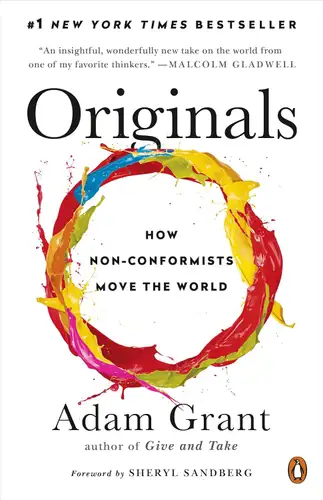
Originals: How Non-Conformists Move the World
Another one that's not explicitly an "introvert book" — but Grant (organizational psychologist, Wharton professor) writes about how non-conformists drive change without being the loudest person in the room.
The research on "strategic procrastination" and idea-timing is gold for introverts who've been told they're too slow or too cautious. Some examples feature extroverts, so you'll need to translate.
But the core insight — that careful preparation and choosing the right allies beats raw charisma — is EXACTLY what introverted professionals need to hear.
One thing to know: If your primary concern is day-to-day energy management or social anxiety as an introvert, this broad innovation-focused book may feel tangential.
- Effective change agents often use strategic procrastination and careful testing rather than impulsive risk-taking
- Choosing the right allies and audiences matters more than charisma when pushing ideas
- Presenting ideas by emphasizing shared values and acknowledging weaknesses increases credibility
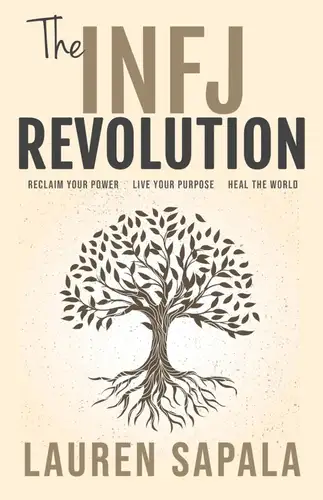
The INFJ Revolution: Reclaim Your Power, Live Your Purpose, Heal the World
I know, I know — Myers-Briggs isn't rigorous science. But if you've ever felt simultaneously "too much" and "too quiet," Sapala writes directly to the empathic, idealistic introvert who feels out of place everywhere.
This one is less about decoding your type and more about what to DO with it: stop shrinking, stop over-giving, and channel that intensity into work and relationships that actually matter to you.
It's niche and unapologetically type-specific. If MBTI does nothing for you, skip it. But for the right reader, it's the book that finally reframes "why does everything feel so intense?" as a strength to use rather than a flaw to manage.
One thing to know: If you don't care about Myers-Briggs or dislike typology frameworks, this book's type-centered approach will likely feel unconvincing or irrelevant.
- Why highly sensitive introverts burn out — and how deliberate recovery and boundaries protect your energy
- How chronic over-giving and people-pleasing quietly drain you, and what to do instead
- How to channel intensity, empathy, and idealism into purpose-driven creative or advocacy work
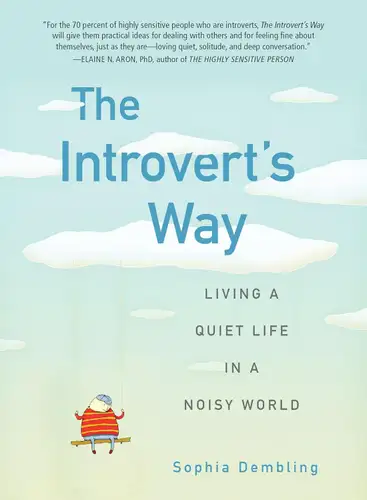
The Introvert's Way: Living a Quiet Life in a Noisy World
Dembling's book is structured as short, relatable essays rather than a program. It validates introvert experiences while suggesting small lifestyle adjustments. Nothing prescriptive. Nothing that screams "you need to fix yourself."
This makes it the safest choice as a gift for someone you love who seems to struggle socially. The message is essentially "here's how to live well as a quiet person" — not "here's how to become less quiet."
If you're already well-versed in introversion, it might feel too basic. But sometimes basic is exactly what someone needs.
One thing to know: If you're already well-versed in introversion science and want advanced strategies or cutting-edge research, this gentle, essay-style book may feel introductory.
- Feeling drained by crowds or constant socializing is normal and doesn't require fixing
- Choosing a quiet life with fewer but deeper relationships is a legitimate, satisfying strategy
- Small environmental and schedule changes can significantly improve daily wellbeing
What's actually different about these books if I've already read Quiet and still struggle with the same things?
Quiet is foundational but conceptual — if you need tactics, go to #2 (Introvert Power) for exercises or #3 (Quiet Influence) for workplace specifics. Reading about introversion and changing your life require different books.
Are any of these books actually useful if I don't have social anxiety — just limited energy for people?
YES. #4 (The Introvert Advantage) and #2 (Introvert Power) are specifically about energy management, not anxiety. Big difference, and most books conflate them.
Which of these books won't make me cringe if someone sees me reading it in public?
#8 (Originals) doesn't say "introvert" on the cover at all. #1 (Quiet) has enough cultural credibility that nobody will think you're reading self-help.
If I can only read one book and I'm skeptical of the whole genre, which one has the best chance of not wasting my time?
#1 (Quiet) if you want research and big-picture reframing. #2 (Introvert Power) if you want to actually DO something different by the end.
Do any of these work as audiobooks, or do they require highlighting and note-taking to be useful?
#1 (Quiet) narrates beautifully, and most of these work fine in audio. Skip audio for #4 (The Introvert Advantage) if you want to use the scripts and checklists.
Look — most introvert books tell you it's okay to be quiet. You probably already knew that. What you need is something that actually helps you navigate the specific situation draining you right now.
Whether that's a career ceiling, relationship friction, or just the exhaustion of existing in a world that won't stop talking... one of these books addresses it directly.
Start with the one that matches your situation. Read it. Apply ONE thing. See what changes.
KEEP MOVING FORWARD.
More Books on Self-Growth
- I Spent $847 on Critical Thinking Books — These 10 Were Worth It
- 9 Anger Management Books That Might Actually Work (From Someone Who's Thrown a Few)
- 9 Books That Actually Get You Off the Couch (From Someone Who Read Them All While Procrastinating)