I Spent $847 on Critical Thinking Books — These 10 Were Worth It
Heads up: some links below are affiliate links. At no extra cost to you, I may earn a small commission if you buy through them.
I was three chapters into yet another "master your mind" book when I realized I'd read this exact argument before. Different author. Different cover. Same repackaged common sense dressed up in new vocabulary.
I'd spent $847 on thinking books over two years and couldn't point to a single decision I'd made differently because of any of them.
These 10 are different — I've read every one cover to cover, some twice, and I've grouped them by the specific problem you're actually trying to solve. Because "become a better thinker" isn't a goal. It's a bumper sticker.
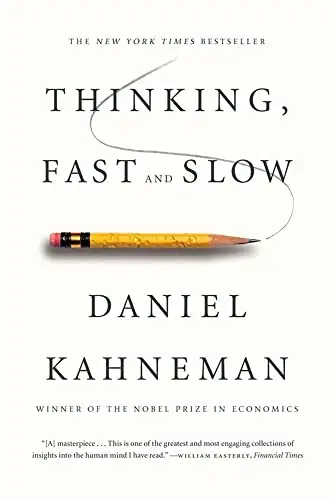
Thinking, Fast and Slow
This is the book that every other "cognitive bias" book is summarizing, usually badly.
Kahneman spent 40 years running experiments on how humans actually make decisions — not how we think we do, not how we should, but how we DO. The dual-process framework (fast intuitive thinking vs. slow deliberate thinking) sounds simple but explains an absurd amount of everyday error.
It's 512 pages. It's dense. And it's worth it because this isn't theory — it's your brain's actual operating manual.
One thing to know: Not ideal if you want something light for commuting. This rewards slow, focused attention. Trying to absorb it while driving is like trying to learn calculus during a rock concert.
- Your "gut feelings" are often just System 1 substituting an easy question for a hard one — and you won't notice unless you build habits that catch it
- Loss aversion, anchoring, and availability bias are predictable enough that you can design around them in high-stakes decisions
- Statistical thinking is profoundly unnatural for humans, which means most people's intuitions about probability are wrong in predictable ways
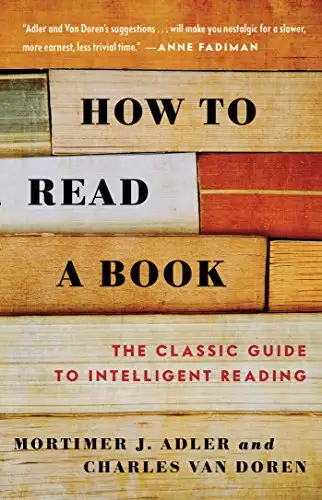
How to Read a Book: The Classic Guide to Intelligent Reading
I know what you're thinking — "I already know how to read." That's what I thought for three decades. Then I tried Adler's framework on a book I'd read twice before and realized I'd missed the author's actual argument both times.
This isn't about speed reading or comprehension tricks. It's about asking the right questions: What problem is the author solving? What are their key terms? What evidence are they using?
You don't just read differently after this — you LISTEN differently in meetings, conversations, debates.
One thing to know: The examples are dated (mid-20th century) and the prose is formal. It reads like a demanding study guide, not a breezy airplane book. That's a feature, not a bug.
- You haven't understood a position until you can restate it better than the person who holds it — only then have you earned the right to disagree
- Inspectional, analytical, and syntopical reading are different skills for different purposes, and most people only use one
- Putting multiple authors "in dialogue" on the same question is the fastest way to escape single-source dogmatism
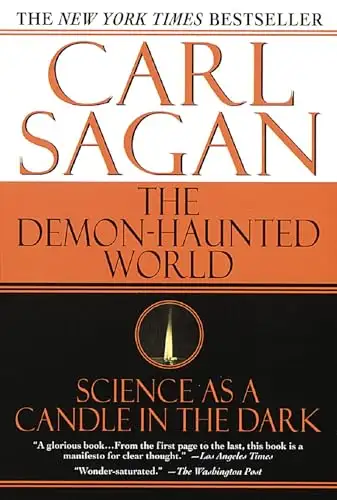
The Demon-Haunted World: Science as a Candle in the Dark
Sagan was writing about misinformation and pseudoscience in 1995, and reading it now feels like prophecy.
The famous "baloney detection kit" chapter is worth the entire book — it's a practical checklist for evaluating any claim: Is there independent confirmation? What are the alternative explanations? Is the claim falsifiable?
These sound obvious. They're not. I've used this checklist in work meetings more times than I can count.
One thing to know: Sagan is explicitly and unapologetically skeptical of paranormal and pseudoscientific claims. If you're buying this for someone who believes in astrology, expect friction.
- Extraordinary claims require extraordinary evidence, and the burden of proof lies with the person making the claim
- Science isn't about possessing facts — it's about institutionalized error-correction through peer review, reproducibility, and openness to refutation
- There are specific, learnable tests for distinguishing legitimate expertise from confident-sounding nonsense
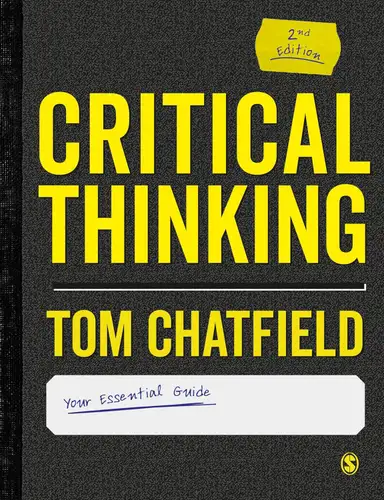
Critical Thinking: Your Guide to Effective Argument, Successful Analysis and Independent Study
This is what a modern critical thinking textbook should look like. Chatfield breaks down argument structure, common fallacies, and evidence evaluation with contemporary examples that actually feel relevant.
It's systematic enough for coursework but readable enough for self-study. The exercises are genuinely useful — not filler.
One thing to know: There are diagrams and visual aids that work better on paper or screen, so a quick skim will miss some of the value.
- Arguments have identifiable parts — claims, reasons, assumptions, evidence — and you can learn to dissect them systematically
- Naming fallacies (ad hominem, straw man, appeal to popularity) makes them easier to spot and avoid
- Managing sources and distinguishing between types of evidence is a skill, not an instinct
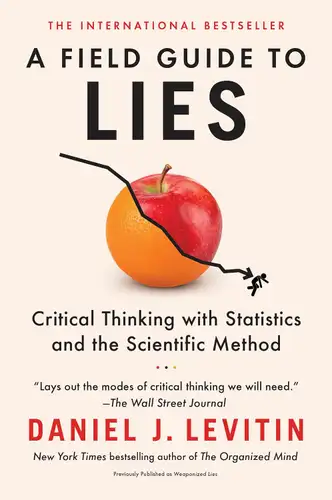
A Field Guide to Lies: Critical Thinking in the Information Age
Levitin is a neuroscientist who got tired of watching people get manipulated by numbers.
This book walks through exactly how statistics, graphs, and expert claims get twisted in news and social media — and gives you specific tests to apply on the fly.
The audiobook works because it's built around vivid examples rather than notation.
One thing to know: This stays tightly focused on information literacy and media manipulation. If you want deep cognitive psychology or formal logic, look elsewhere.
- Always ask HOW numbers were generated — sample selection, definitions, and base rates can completely change what a statistic means
- Correlation does not imply causation, and there are recurring patterns in how this confusion gets exploited
- Authority should be evaluated by track record and domain relevance, not credentials alone
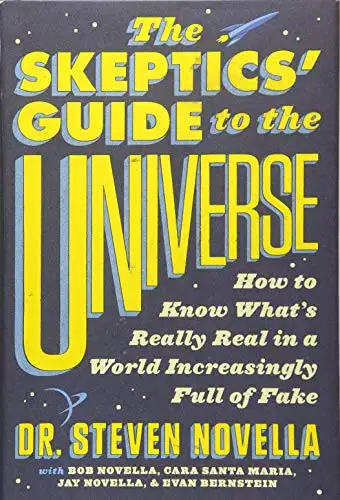
The Skeptics' Guide to the Universe: How to Know What's Really Real in a World Increasingly Full of Fake
Based on a long-running podcast, this book blends narrative case studies with clear explanations of logical fallacies and scientific reasoning. The tone is conversational — sometimes cheeky — which makes it IDEAL for audio.
It systematically covers why our brains misperceive reality and gives you tools to counter it.
One thing to know: The style is popular-science and podcast-like, not academic monograph. If you need dense citations and formal rigor, this will feel too light.
- Human perception and memory are unreliable instruments — robust skepticism requires external checks
- Pseudoscience has recurring red flags: reliance on anecdotes, moving goalposts, conspiracy-style reasoning
- Embracing uncertainty is a feature of good thinking, not a weakness
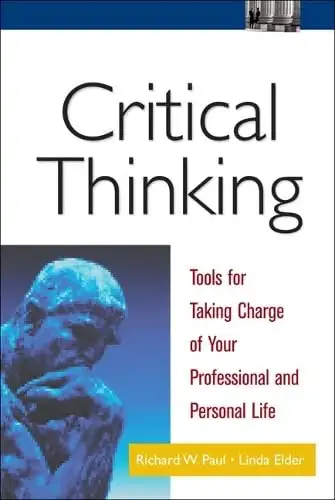
Critical Thinking: Tools for Taking Charge of Your Professional and Personal Life
Paul and Elder are pioneers in critical thinking education, and this book delivers a structured framework you can actually apply.
Elements of thought, intellectual standards, intellectual virtues — it sounds abstract but becomes intensely practical when you start using it to audit your own reasoning.
One thing to know: The writing is didactic and sometimes repetitive — this is a course in book form, not entertainment.
- Every act of thinking has identifiable elements: purpose, question, information, concepts, assumptions, inferences, implications, point of view
- Universal intellectual standards (clarity, accuracy, precision, relevance, depth) can be used to evaluate any piece of reasoning
- Intellectual humility and fair-mindedness aren't moral decorations — they're preconditions for overcoming your own biases
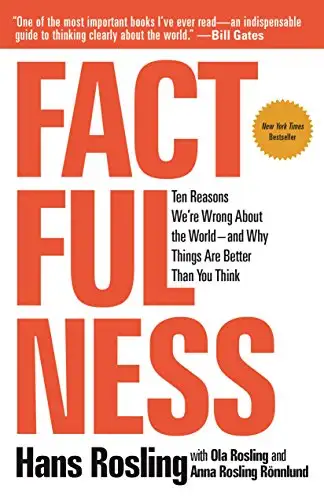
Factfulness: Ten Reasons We're Wrong About the World—and Why Things Are Better Than You Think
Rosling uses global health and economic data to demonstrate how systematically WRONG our intuitions are about the state of the world.
Then he identifies the specific mental habits that cause the distortion — gap thinking, fear instinct, urgency instinct. It's data-heavy but told through vivid stories.
One thing to know: This focuses on a specific domain (global trends) rather than general-purpose logic. If you want argument analysis or formal reasoning, this isn't it.
- Most people dramatically overestimate how bad the world is because of outdated facts and media-driven availability bias
- Naming your distorting "instincts" makes them easier to counteract
- Simple, well-designed categories (like four income levels instead of "developed vs. developing") lead to more accurate mental models
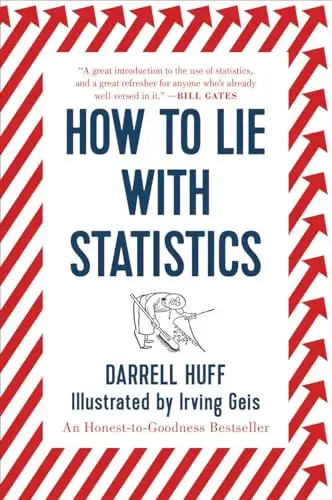
How to Lie with Statistics
144 pages. Published in 1954. Still the single best inoculation against statistical manipulation you can get. Huff uses cartoons and simple language to expose how numbers get twisted — misleading averages, truncated axes, biased samples.
You'll never look at a graph the same way.
One thing to know: This is an introduction, not a comprehensive statistics education. The examples are dated. But the manipulation techniques? Timeless.
- Always ask WHICH average (mean, median, mode) and whether it's the one that actually matters
- Graph scales, starting points, and omitted context can create any impression without technically lying
- Sampling methods often matter more than sample size
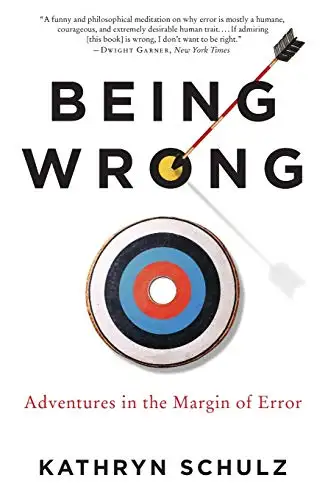
Being Wrong: Adventures in the Margin of Error
This one surprised me. Schulz doesn't list fallacies or give you frameworks — she reframes your entire relationship with error. Being wrong isn't something to avoid at all costs. It's the only way to learn anything.
This is transformative for people (like me) who reflexively defend positions instead of updating them.
One thing to know: It's essayistic and exploratory, not a structured toolkit. The value comes from insight and reframing, not checklists.
- Your subjective experience of "being right" feels identical whether you're correct or mistaken — certainty is not evidence
- Social and identity pressures keep us locked into wrong beliefs, making public opinion-revision a crucial skill
- Treating error as opportunity instead of humiliation is the mindset shift that makes real inquiry possible
Why do I still make bad decisions even after reading books about cognitive biases?
Knowing about biases and catching them in the moment are completely different skills. #1 helps with knowledge, but #2 and #7 give you systematic processes that create the pause where catching actually happens.
Is there a single book that's actually worth reading, or do I need to read five to get one good idea?
If you only read one, make it #1. If you want practical tools faster, #9 is 144 pages and delivers.
Which of these books will actually change my behavior versus just make me feel smarter temporarily?
#2 and #7 are framework books — they give you processes you'll use repeatedly. #10 changed my behavior more than any of them, but through mindset shift rather than methodology.
Are critical thinking books useful if I already consider myself a skeptical person?
Skepticism without structure is just stubbornness. #3 and #6 turn gut-level suspicion into actual methodology.
How do I know if a 'critical thinking' book is legit or just another self-help book with a smarter title?
Check who wrote it. #1 is by a Nobel laureate. #7 is by educators with decades of peer-reviewed work. If the author made their money selling "thinking courses" rather than actually thinking... that's your red flag.
You don't need all 10. You need the ONE that matches where you're stuck right now.
If you've read thinking books before and nothing stuck, start with Thinking, Fast and Slow — it's the foundation everything else builds on, and the framework actually surfaces when you need it.
KEEP MOVING FORWARD.
More Books on Self-Growth
- 10 Books for Introverts That Actually Help (Not Just Validation)
- 9 Books That Actually Get You Off the Couch (From Someone Who Read Them All While Procrastinating)
- 10 Books That Actually Help Overthinkers (From Someone Who's Read Too Many That Didn't)