10 Books That Actually Help Overthinkers (From Someone Who's Read Too Many That Didn't)
Heads up: some links below are affiliate links. At no extra cost to you, I may earn a small commission if you buy through them.
I was four chapters into my ninth book about overthinking when I realized I was overthinking which book would finally fix my overthinking. At 2 AM. Again.
The irony wasn't lost on me.
I've read every book on this list cover to cover — some of them twice, because apparently I didn't trust my own notes.
What I learned is that most "best books for overthinkers" lists are just recycled Amazon bestsellers written by people who've never stared at a ceiling at 3 AM wondering if that thing they said in 2019 ruined everything.
This list is different because I'm telling you which books actually worked, which ones disappointed, and — more importantly — which one YOU should start with based on what's actually going on in your head.
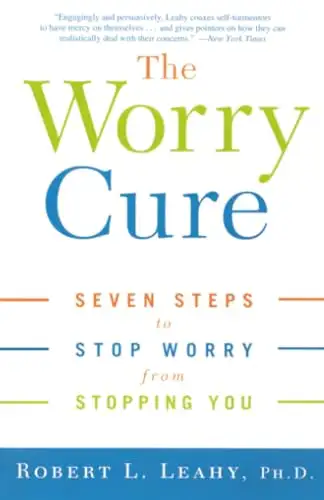
The Worry Cure: Seven Steps to Stop Worry from Stopping You
If you've ever felt like worry was your full-time job, Leahy gets it. This isn't another book telling you to breathe and think happy thoughts.
It's a clinical breakdown of how worry maintains itself — why reassurance-seeking makes it worse, why "just in case" thinking never ends, and how to separate problems you can solve from hypotheticals you're just... entertaining.
One thing to know: It's not a fast-acting crisis book. More clinical than warm. But that's also what makes it trustworthy.
- How to separate solvable problems from hypothetical worries that have no endpoint
- Why reassurance-seeking and mental checking keep anxiety alive
- How to respond to uncertainty without turning it into analysis loops
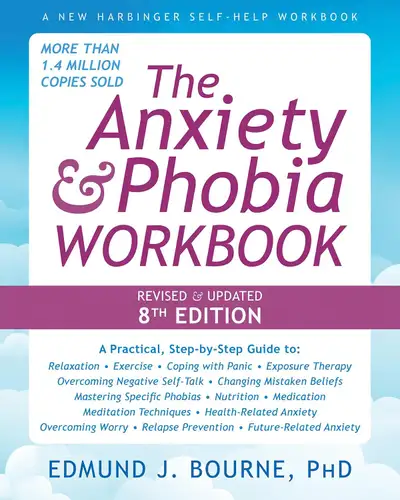
The Anxiety and Phobia Workbook
Ok, I'm not gonna lie — 576 pages is intimidating.
But here's the thing: if your overthinking comes packaged with panic attacks, avoidance behaviors, sleep problems, and that general sense that your nervous system has gone rogue... you don't need a cute little book with breathing exercises.
You need THIS.
It covers everything. Physical relaxation techniques, cognitive restructuring, exposure work, lifestyle factors. It's been a therapist go-to for over 30 years for a reason.
One thing to know: This is not a "read on your commute" situation. It's a workbook. You gotta do the work.
- How anxiety, avoidance, and overthinking reinforce one another in a loop
- Concrete tools for reducing physical arousal and mental spiraling
- Exposure-based strategies to stop reinforcing fear through avoidance
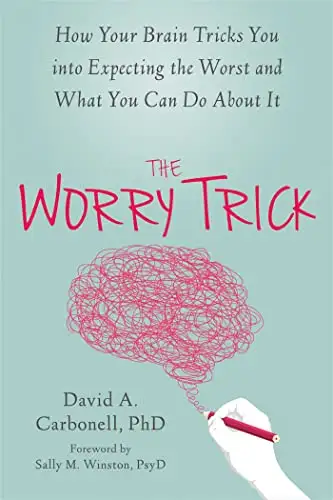
The Worry Trick: How Your Brain Tricks You into Expecting the Worst and What You Can Do About It
This book does one thing REALLY well: it explains why your worried thoughts feel so urgent and convincing even when some part of you knows they're probably overblown.
Carbonell calls this "the worry trick" — your brain treating unlikely scenarios like breaking news because, evolutionarily speaking, false alarms were safer than missed threats.
It's not a warm hug of a book. It's more like a smart friend explaining how you keep getting played by your own mind. And somehow that's more helpful.
One thing to know: Won't satisfy readers who want heavy academic citations and research methodology breakdowns.
- Why anxious predictions feel urgent even when they're unreliable
- How to stop arguing with every worry thought (spoiler: arguing makes it worse)
- How uncertainty becomes a trigger for mental escalation
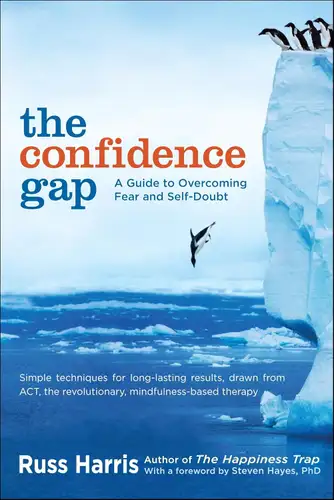
The Confidence Gap: A Guide to Overcoming Fear and Self-Doubt
Here's what Russ Harris gets that most self-help authors don't: waiting to feel confident before you act is the trap, not the solution.
This book uses Acceptance and Commitment Therapy (ACT) to show why trying to eliminate self-doubt usually backfires. Instead of fighting anxious thoughts, you learn to act WITH them still present.
Game-changing for overthinkers who are paralyzed by analysis... wait, I said I wouldn't use that word. Let's say: ACTUALLY useful for people stuck in their heads.
One thing to know: It's not a step-by-step cognitive disputation book. It's a different framework entirely.
- Why waiting to feel confident keeps you stuck in loops
- How to defuse from thoughts instead of obeying them
- How values-based action reduces the power of rumination
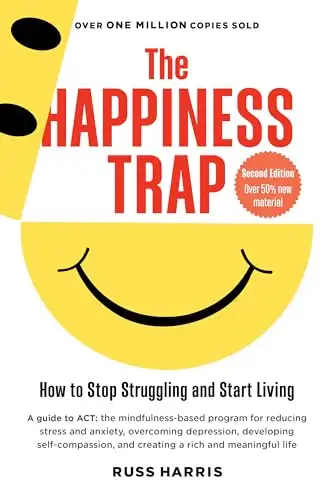
The Happiness Trap: How to Stop Struggling and Start Living
If #4 is about confidence specifically, this one is the broader ACT framework applied to suffering in general. And here's the core insight that changed things for me: the problem isn't that you have anxious thoughts.
The problem is you're FUSED with them — treating them like commands instead of passing mental events.
It's one of the most widely recommended therapy books for a reason. Readable, evidence-based, practical.
One thing to know: Not a deeply narrative or emotionally literary book. It's teaching you a framework.
- How fusion with thoughts turns normal worries into stuck loops
- Why struggling with internal experience often amplifies distress
- How to move toward chosen actions even with anxiety present
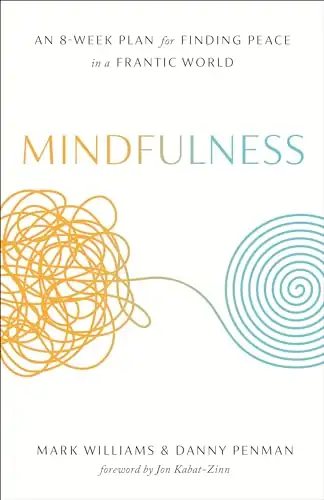
Mindfulness: An Eight-Week Plan for Finding Peace in a Frantic World
I know, I know. "Mindfulness." You've heard it a thousand times. But hold on — this isn't generic "be present" advice.
Mark Williams helped develop Mindfulness-Based Cognitive Therapy (MBCT), which has actual research showing it reduces relapse in depression and helps with rumination.
The eight-week structure makes it perfect for audiobook listeners who want something to follow, not just concepts to absorb. But you do have to actually PRACTICE. Reading about mindfulness doesn't do anything.
One thing to know: If you hate practice-based books or expect results from reading alone, this isn't your pick.
- How mindfulness changes the relationship to repetitive thoughts
- A structured eight-week practice plan you can actually follow
- Ways to interrupt rumination before it escalates
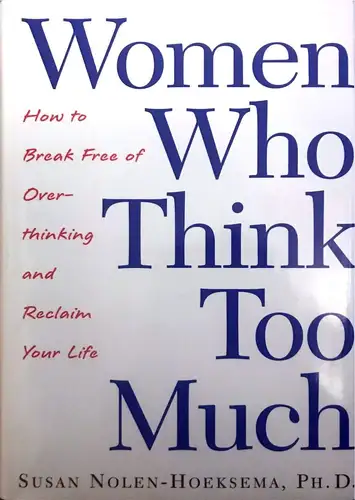
Women Who Think Too Much: How to Break Free of Overthinking and Reclaim Your Life
Ok, the title is what it is. But here's why this book matters: Susan Nolen-Hoeksema literally defined the modern research conversation around rumination.
This isn't someone who read papers and summarized them — she WROTE the papers other people cite.
The gendered framing is dated, but the underlying psychology applies to everyone. If you want to understand WHY overthinking persists from someone who spent a career studying it, this is the source material.
One thing to know: The title may feel irrelevant if you're not a woman, but the research is universal. Don't let the cover stop you.
- How rumination differs from useful reflection (crucial distinction)
- Why repetitive self-focus prolongs distress instead of resolving it
- What patterns make overthinking more likely to continue
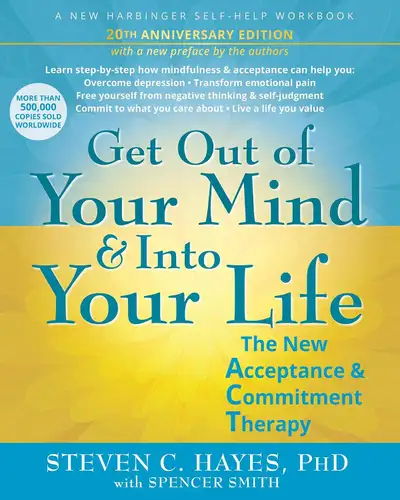
Get Out of Your Mind and Into Your Life: The New Acceptance and Commitment Therapy
Steven Hayes CREATED Acceptance and Commitment Therapy. So if you're going to learn ACT, why not learn it from the guy who invented it?
This book is more conceptually demanding than the Russ Harris books (#4 and #5), but that's also what makes it valuable.
It doesn't just tell you what to do — it explains WHY traditional thought-control strategies backfire and what the alternative actually is.
One thing to know: Not the easiest audiobook listen. More clinical than comforting. But if you want the real thing, not the watered-down version, this is it.
- Why trying to control inner experience can intensify it
- How to separate thoughts from actions
- How values-based living reduces the grip of overthinking
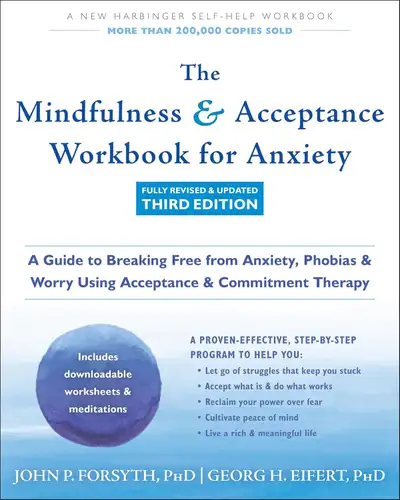
The Mindfulness and Acceptance Workbook for Anxiety
If #8 is the theory, this is the practice. It combines mindfulness and ACT into an actual workbook with exercises you can do this week. Not concepts to understand — things to DO.
It's particularly strong for people whose overthinking is tied to avoidance. You know — when you don't do the thing because you're worried about the thing, and then you worry MORE because you didn't do the thing? Yeah.
This addresses that loop directly.
One thing to know: It's a workbook. If you want something passive to read, look elsewhere.
- How to notice thoughts without treating them as commands
- How avoidance keeps anxiety and rumination alive
- How willingness and exposure reduce fear over time

The Untethered Soul: The Journey Beyond Yourself
I'm putting this last because I want to be honest: it's the least evidence-based book on this list. No clinical studies. No peer-reviewed research. It's more philosophical and spiritual than psychological.
But.
It's also the book I've seen actually get READ by people who normally hate self-help. It's short, accessible, and the core idea — that you are not your thoughts, you're the one OBSERVING them — lands in a way that's hard to forget.
One thing to know: If you need research citations and clinical credibility, this isn't your book. If you want something a friend might actually finish, it might be.
- How to observe thoughts instead of identifying with them
- Why inner resistance can intensify mental noise
- How loosening attachment to thoughts can reduce spirals
Why do books about overthinking often make the problem worse — and which ones actually don't?
Because most of them give you MORE things to think about. More techniques to try, more frameworks to evaluate, more reasons to believe you're doing it wrong.
The books that break this pattern (#3, #4, #5) focus on changing your RELATIONSHIP to thoughts rather than giving you more things to think. That's the difference.
Is there a difference between books for general overthinking versus clinical anxiety, and does it matter which I pick?
Yes, and yes. If you have racing thoughts but can generally function, start with #3 or #4. If you're also dealing with panic, avoidance, sleep disruption, or physical symptoms, go straight to #2.
It's more comprehensive because you need more comprehensive.
Which of these books work in audio format and which ones do I need to physically read to get value?
#4, #5, #6, and #10 all work great in audio — conversational enough to follow without visuals. #2 and #9 are workbooks with exercises, so you really need the physical copy. #1 and #8 CAN be listened to but are denser, so print might be better if you're new to this stuff.
How do I know if I need a book or actual therapy — and can a book tell me that?
Honestly? If you're asking this question, consider at least one therapy session to find out. Books are supplements, not replacements.
That said, #1 and #2 are often recommended BY therapists as homework, so they can work alongside professional help. If your overthinking is severely impacting your functioning — job, relationships, sleep — start with a professional.
What's the shortest book on this list that still delivers results for someone who won't finish a 300-page book?
#10 (The Untethered Soul) at 200 pages, followed by #3 (The Worry Trick) at 240. Both are readable in a weekend if you're motivated. Neither is a workbook, so no exercises required.
Are any of these written by people who actually struggled with overthinking versus academics who studied it?
#10 is the most personal — Singer writes from his own contemplative experience. The rest are primarily written by clinicians and researchers who work with overthinkers professionally.
That clinical distance is actually valuable for the evidence-based books, even if it feels less emotionally resonant.
Which book should I try FIRST if I've already read the popular recommendations and they didn't help?
#8 (Get Out of Your Mind and Into Your Life) or #4 (The Confidence Gap). Both use ACT, which is a fundamentally different approach than the positive thinking or thought-challenging techniques in most popular self-help.
If those other approaches failed, it might be because you need a different framework, not a better version of the same framework.
How do I give a book about overthinking to someone without making them feel like I think they're broken?
Go with #10 (The Untethered Soul). It's the least "you have a problem" and the most "here's an interesting perspective on how minds work." The cover doesn't scream self-help, and it reads more philosophical than therapeutic.
You can frame it as something YOU found interesting, not something you're prescribing.
The best book for overthinkers is the one that matches where you actually are — not the one with the best reviews or the biggest name. If nothing on this list speaks to your situation, you probably don't need another book.
You might need a professional.
But if you're ready to start somewhere, start with The Worry Cure. It explains why your brain does this AND what to do about it, without the fluff.
KEEP MOVING FORWARD.
More Books on Self-Growth
- 8 Books That Actually Changed My Mindset (After Dozens That Didn't)
- 9 Books That Actually Get You Off the Couch (From Someone Who Read Them All While Procrastinating)
- 10 Books for Introverts That Actually Help (Not Just Validation)