
8 Books That Actually Changed My Mindset (After Dozens That Didn't)
Heads up: some links below are affiliate links. At no extra cost to you, I may earn a small commission if you buy through them.
I was sitting in a coffee shop in 2017, staring at the same page of Think and Grow Rich I'd been staring at for twenty minutes, when it finally hit me: I'd read maybe forty mindset books in five years and I was still the same anxious, stuck person I'd been at the start.
The books weren't the problem. I was picking the wrong ones for where I actually was. I've since read another hundred or so — some life-changing, most forgettable — and this list is the eight that actually rewired something.
Different books work for different people at different moments, so I've organized this to help you find YOUR entry point instead of just ranking them by Amazon stars.
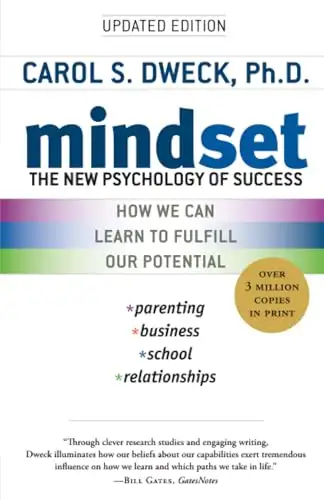
Mindset: The New Psychology of Success
This is the book that made "growth mindset" a thing — and I'll be honest, I almost didn't read it because I'd heard the concept summarized so many times I figured I already knew it. I was wrong.
Dweck spent DECADES studying how beliefs about ability shape motivation, resilience, and performance across sports, business, parenting, and education.
The real value isn't the fixed vs. growth framework — it's learning to NOTICE your own fixed mindset voice in real time. That voice telling you not to try because you might fail? That's your fixed mindset talking.
And once you see it, you can't unsee it.
One thing to know: If you want concrete daily exercises or trauma-sensitive tools, this will feel too conceptual and high-level.
- How to catch yourself avoiding challenges or interpreting struggle as proof you're "not smart enough" — and reframe those moments as skill-building instead
- Why praising effort and strategy works better than praising talent (this one changed how I talk to my kids)
- Treating setbacks as data about your approach, not verdicts on your potential
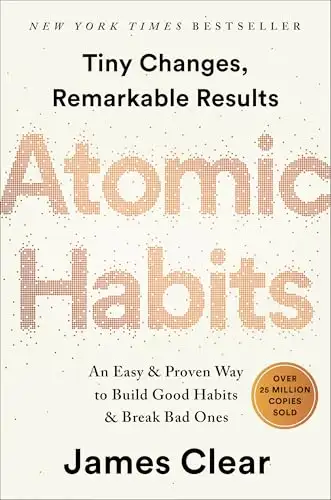
Atomic Habits: An Easy & Proven Way to Build Good Habits & Break Bad Ones
I know what you're thinking — everyone and their dog has recommended this book. Fair. But here's why it actually deserves the hype: Clear doesn't ask you to get motivated. He doesn't tell you to visualize success.
He gives you a SYSTEM for making the right behaviors automatic and the wrong ones harder. The core insight — identity-based habits — quietly rewires your mindset by changing what you DO. You don't become a runner by thinking about running.
You become a runner by running one mile, then doing it again tomorrow, until "I'm a runner" is just... true.
One thing to know: If your main struggle is unprocessed grief, trauma, or severe depression, a habit book alone is not sufficient and may feel superficial.
- The four laws of behavior change: make it obvious, attractive, easy, and satisfying (and invert them to break bad habits)
- Why "become the kind of person who..." is more powerful than chasing outcomes
- How to redesign your environment so good choices become the default
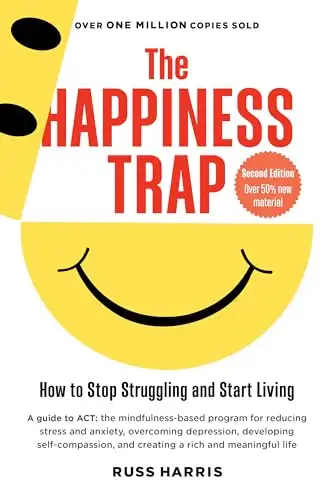
The Happiness Trap: How to Stop Struggling and Start Living
This book found me at rock bottom. I'd been white-knuckling my way through anxiety for years, trying to "think positive" and feeling like a failure when it didn't work. The Happiness Trap flipped everything.
It's based on Acceptance and Commitment Therapy (ACT), which sounds clinical but is actually deeply practical. The core idea: you don't need to eliminate painful thoughts and feelings.
You learn to make ROOM for them while still taking actions that matter. The cognitive defusion exercises — naming your mental stories, singing intrusive thoughts to silly tunes — sound ridiculous. They also work.
One thing to know: If you are allergic to any sort of guided exercise or metaphor (like "the passengers on the bus"), the style may grate despite the solid science behind it.
- Skills to "unhook" from thoughts instead of believing everything your mind tells you
- How to clarify your core values so you have a compass when motivation disappears
- Practical techniques for taking action even when you feel terrible
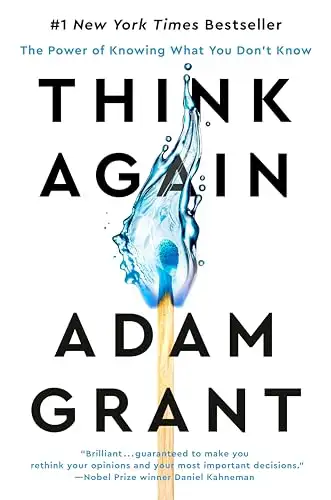
Think Again: The Power of Knowing What You Don't Know
Ever notice how the smartest people you know are sometimes the most stuck? Grant explains why — and what to do about it. This book is about unlearning, which is honestly harder than learning.
The central framework: most of us default to Preacher mode (sermonizing our beliefs), Prosecutor mode (attacking others' views), or Politician mode (seeking approval).
Scientist mode — testing ideas, seeking disconfirming evidence — is rare and powerful. The stories are engaging enough that this is one of the best audiobook experiences on the list.
One thing to know: If you're in acute emotional crisis and need help regulating overwhelming feelings, this book's focus on thinking patterns may feel too indirect.
- How to catch yourself preaching, prosecuting, or politicking — and shift into curiosity instead
- Techniques for productive disagreement that don't destroy relationships
- Permission to change your mind without feeling like you're losing
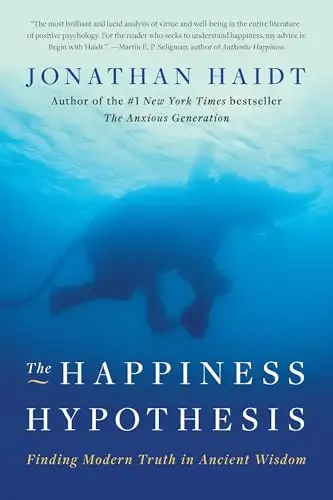
The Happiness Hypothesis: Finding Modern Truth in Ancient Wisdom
This doesn't FEEL like a self-help book, which is exactly why it works for people who hate self-help.
Haidt is a moral psychologist, and he treats ancient wisdom (Stoics, Buddha, the Bible) like hypotheses to be tested against modern research.
The "rider and elephant" metaphor — your conscious mind riding an emotional elephant — changed how I think about self-control. You can't just tell yourself to change. You have to understand and work WITH your emotional elephant.
One thing to know: If you dislike psychology or philosophical discussion and want only direct how-to instructions, this may feel too conceptual and slow.
- Why willpower alone fails and how to actually collaborate with your emotions
- The research on what actually makes people happy long-term (spoiler: it's not what most people chase)
- How to reinterpret events in ways that change your emotional experience
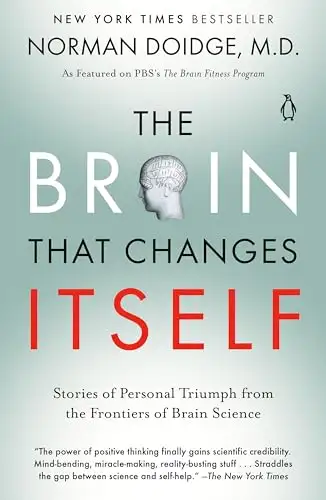
The Brain That Changes Itself: Stories of Personal Triumph from the Frontiers of Brain Science
I needed this book to believe change was possible.
Doidge documents neuroplasticity through case studies so compelling they read like thrillers — stroke patients rewiring their brains, people overcoming OCD, learning disorders transformed through targeted practice. This isn't motivation.
It's EVIDENCE. Your brain is not fixed. It changes based on what you repeatedly do and pay attention to. That's not self-help woo. That's neuroscience.
One thing to know: If you want a short, highly practical how-to guide, the detailed case histories and science may feel too long and technical.
- Hard evidence that the adult brain is far more changeable than we were taught
- Why repetition and attention are the key levers for rewiring neural pathways
- A completely transformed sense of what's possible for your own change

Man's Search for Meaning
This book is 200 pages that will wreck you and rebuild you. Frankl survived Nazi concentration camps and developed logotherapy — the idea that meaning is the primary driver of human resilience. It's not cheerful.
It's not optimistic in any cheap sense. But it reframes suffering in a way that makes it... bearable. Maybe even purposeful. I read this after losing someone I loved, and it was the only thing that helped.
It bypasses defensiveness because it doesn't feel like advice — it feels like wisdom earned through hell.
One thing to know: If you are currently very fragile or triggered by accounts of extreme trauma, this may be too emotionally heavy right now.
- The radical idea that you always retain some freedom in how you relate to your circumstances
- How connecting suffering to purpose makes it more bearable
- A question that changes everything: "What is life asking of me right now?"
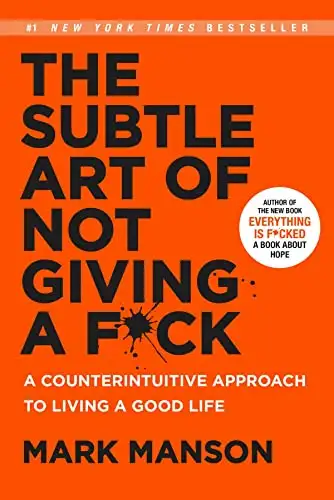
The Subtle Art of Not Giving a F*ck: A Counterintuitive Approach to Living a Good Life
Look — the title is obnoxious and I almost didn't read it. But Manson is doing something genuinely useful here: dismantling the "feel good all the time" industrial complex.
The core idea is simple but radical: you only have so many f*cks to give, so you better choose wisely. Your life is defined by which problems you choose to have, not by avoiding problems.
It's more philosophy than psychology, but sometimes a well-timed attitude adjustment is exactly what you need.
One thing to know: If you dislike profanity or want a tightly research-cited academic style, this will likely annoy you despite its substance.
- Why trying to feel exceptional all the time is a trap
- How choosing good values (growth, honesty, responsibility) beats chasing good feelings
- Permission to embrace being ordinary — which is weirdly liberating
Why do I keep reading self-improvement books but never actually change?
Probably because you're consuming instead of implementing. Pick ONE book (#2 if you want action), do ONE exercise for 30 days, then evaluate. Reading is not changing.
Is there a mindset book that works for someone who's already read all the popular ones?
#5 (The Happiness Hypothesis) or #6 (The Brain That Changes Itself). Neither feels like self-help and both will teach you something genuinely new.
How do I know if a mindset book is based on real science or just someone's opinion dressed up as fact?
Check if the author cites peer-reviewed research and whether they acknowledge limitations. #1 and #6 are bulletproof on this. If a book promises transformation with no caveats, run.
Can you actually change your mindset at 40 or 50 or is this all for younger people whose brains are still plastic?
Read #6. Doidge documents people changing their brains well into their 60s and beyond. Neuroplasticity doesn't disappear — it just requires more intentional effort.
What's the minimum effective dose — is there ONE book that covers everything without me having to read twenty?
If you can only read one, make it #1 (Mindset). It's the foundation everything else builds on. Then add #2 (Atomic Habits) when you're ready to turn understanding into action.
These books won't change your life — what you DO with them might. Pick the one that matches where you actually are, not where you wish you were. Read it. Do something uncomfortable. Repeat.
KEEP MOVING FORWARD.
More Books on Self-Growth
- 10 Books That Actually Help Overthinkers (From Someone Who's Read Too Many That Didn't)
- I Read 10 Books About Emotional Intelligence So You'd Only Have to Read One
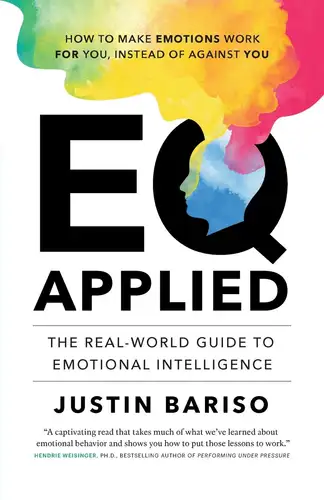
- 9 Books That Actually Get You Off the Couch (From Someone Who Read Them All While Procrastinating)