10 Books on Dealing with Difficult People That Don't Insult Your Intelligence
Heads up: some links below are affiliate links. At no extra cost to you, I may earn a small commission if you buy through them.
I was sitting in my car in the parking lot, 15 minutes before a meeting I was dreading, googling "how to deal with passive-aggressive boss" for maybe the twentieth time. I'd already read three books on the topic.
They all said some version of "set boundaries" and "don't take it personally"—which is like telling someone drowning to "just swim better."
I've now read dozens of books in this space, and here's what I've learned: most are useless, a few are genuinely helpful, and knowing which is which saves you months of frustration.
This list covers ten books for very different situations—burned-out managers, family hostages, people who've tried everything—so you'll find your fit.
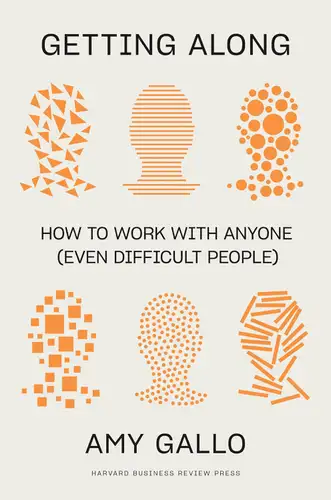
Getting Along: How to Work with Anyone (Even Difficult People)
Here's what most "difficult people" books get wrong: they assume you can just... leave. Or escalate to HR. Or "set boundaries" with someone who controls your performance review. NOPE. Gallo gets this.
She's an HBR contributing editor who's spent years in organizational psychology, and the book reads like she's actually worked in a real office with real politics.
She breaks difficult people into eight archetypes—the insecure boss, the pessimistic peer, the political operator—and gives you specific playbooks for each. Not theory. Playbooks.
One thing to know: If your main issue is a family member or partner, this won't help much—it's laser-focused on workplace dynamics.
- How to identify which difficult archetype you're dealing with and tailor your strategy to THAT pattern instead of using generic advice
- Specific scripts for hard conversations, including how to phrase feedback and document problems without escalating
- When to persist, when to work around the person, and when to strategically limit exposure without torching your career
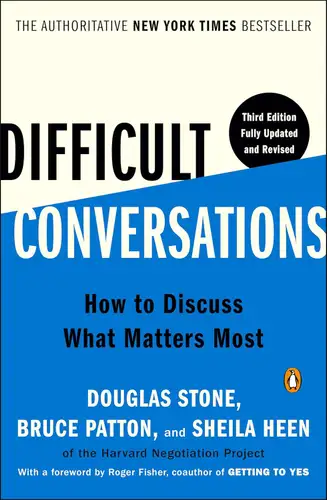
Difficult Conversations: How to Discuss What Matters Most
I'm gonna be honest—I avoided this book for years because it sounded academic and boring. I was wrong.
It's from the Harvard Negotiation Project (same people who created Getting to Yes), and it does something I've never seen another book do: it breaks every difficult conversation into THREE separate conversations happening at once.
The "what happened" conversation. The feelings conversation. The identity conversation. Once you see this framework, you can't unsee it. You realize why your previous approaches kept failing—you were only addressing one of the three.
One thing to know: If you want quick tricks to "win" arguments, this will frustrate you. It's about understanding, not dominating.
- How to shift from "who's right?" (blame frame) to "what did we each contribute?" (which actually gets somewhere)
- A prep process for hard talks that clarifies YOUR story before you start arguing your case
- How to handle the identity piece—the part where you feel your competence or goodness is under attack—so you don't get derailed by defensiveness
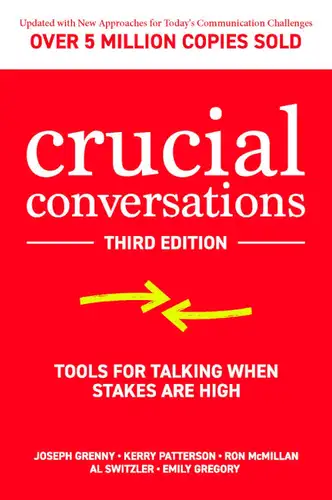
Crucial Conversations: Tools for Talking When Stakes Are High
Yes, you've probably seen this recommended a hundred times. Here's why it keeps showing up: the tools actually work.
The STATE model (Share facts, Tell your story, Ask for their path, Talk tentatively, Encourage testing) sounds mechanical on paper but in practice it's the difference between "that conversation went off the rails" and "that was hard but we got somewhere."
The book is built from decades of organizational consulting, and it shows—these authors have watched thousands of workplace conversations go wrong and isolated exactly where they break.
One thing to know: It assumes both parties are at least somewhat reasonable. If you're dealing with genuine abuse or someone who weaponizes every conversation, some advice will be too optimistic.
- How to spot when a conversation becomes "crucial" and immediately create psychological safety before the other person shuts down
- The STATE model for expressing hard truths without triggering fight-or-flight
- How to establish "mutual purpose" so you can re-center when the other person deflects or blames
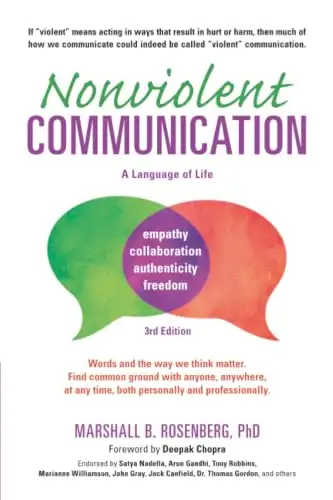
Nonviolent Communication: A Language of Life
Ok, I realize the title sounds like it's for people who want to hold hands and sing. It's not.
Rosenberg's four-part model (observation, feeling, need, request) is actually a tactical framework for defusing conversations that keep exploding.
The book is FULL of transcripts—actual back-and-forth dialogues showing how typical arguments spiral and how to rewrite them.
If you've got a parent, sibling, or in-law you're stuck with for life and every interaction follows the same miserable pattern... this is the book that helps you change YOUR steps in that dance.
One thing to know: If you're dealing with severe abuse or someone who weaponizes vulnerability, NVC alone isn't enough and might even expose you to more manipulation.
- How to separate observations from judgments so you can describe what happened without immediately triggering defensiveness
- A structure for naming your feelings and needs explicitly instead of hinting, complaining, or expecting mind-reading
- How to hear the needs behind someone's attacks—which often de-escalates conflict even when you can't agree with their behavior
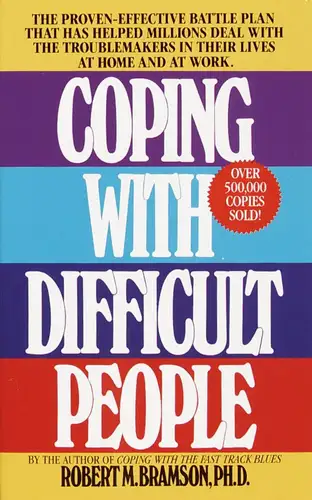
Coping with Difficult People
This one's from 1988, and some examples feel dated. But here's the thing: difficult people haven't changed much in 35 years.
Bramson categorizes them (the Sherman Tank, the Sniper, the Complainer, the Know-It-All) and tells you EXACTLY how to respond to each type with specific dialogue and even body posture suggestions.
No fluff about "understanding their inner child."
Just: "When the Tank attacks, do THIS. When the Sniper takes a shot, say THIS." If you're tired of books that make you responsible for the other person's emotional growth, this is refreshingly pragmatic.
One thing to know: Not heavily researched by modern standards—it's practical wisdom, not psychology studies.
- Quick diagnosis of which difficult style you're facing so you can respond strategically instead of taking it personally
- Specific response patterns—like calmly interrupting a hostile attacker or redirecting a chronic complainer toward problem-solving
- When and how to escalate using third parties or formal processes when direct communication fails
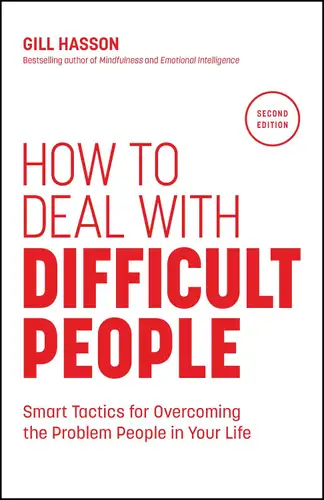
How to Deal with Difficult People: Smart Tactics for Overcoming the Problem People in Your Life
If you're buying for someone else—a friend, a family member, someone who needs this but would never search for it—this is the one. The cover is neutral, the tone is straightforward, and the chapters are short and practical.
Hasson covers controlling people, passive-aggressive people, negative people across work AND family without getting heavy or accusatory.
It's not the deepest book on this list, but it's the most likely to actually get read by someone who didn't choose it themselves.
One thing to know: Evidence-demanders will find it light on citations—it's practical guidance, not research.
- Tactics matched to specific difficult behaviors (constant criticism, emotional blackmail, etc.) instead of one-size-fits-all advice
- Scripts for saying no without lengthy explanations
- How to tell when you can change the dynamic vs. when you just need to protect yourself
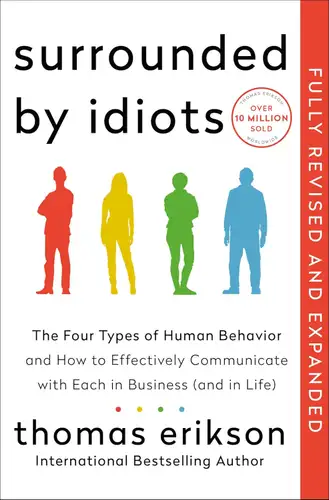
Surrounded by Idiots
I know what you're thinking: the title is obnoxious. And yes, the DISC-style color-coded personality model is oversimplified and debated by actual psychologists. But.
Here's why it's on the list: it's MEMORABLE. You'll finish this book and actually remember how to adjust your communication for different types.
The audiobook narration is engaging, the stories are concrete, and during your commute you can start applying it mentally to your coworkers. Sometimes "technically simplified" beats "academically rigorous but you forget everything."
One thing to know: If you strongly prefer scientifically validated personality models, this will annoy you. Much of the framework is anecdotal.
- A simple four-color classification for colleagues that predicts how they'll respond to feedback, deadlines, and conflict
- How to adapt your pace, detail level, and emotional tone to the other person's profile
- Which of YOUR behaviors trigger which types, so you can change your approach first
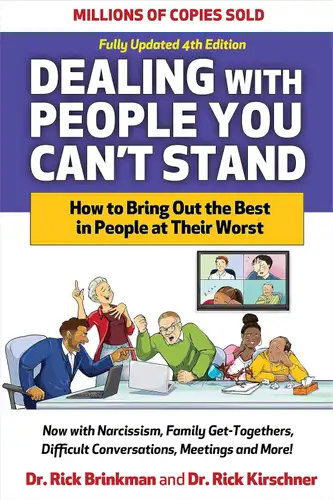
Dealing with People You Can't Stand
This one's been around since the 90s and has sold millions of copies for a reason: it's actually... fun to read?
The authors catalog difficult types (Tank, Know-It-All, Whiner, Yes Person, Maybe Person, Nothing Person, No Person, Sniper, Think-They-Know-It-All, Grenade) with vivid descriptions and detailed strategies for each.
The tone is light enough to make the topic bearable while still giving you usable tools. If Bramson's book (#5) is the no-nonsense tactical manual, this is its more entertaining cousin.
One thing to know: If your situation involves serious trauma or abuse, the light tone and caricatures may feel too superficial.
- How to quickly identify which behavioral type you're facing and pivot to a targeted response
- Techniques like "fogging" and assertive listening to avoid getting dragged into emotional spirals
- Contingency plans for repeated encounters, including how to exit conversations and when to escalate
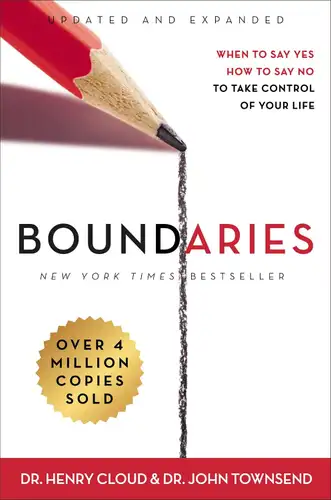
Boundaries: When to Say Yes, How to Say No to Take Control of Your Life
Everyone tells you to "set boundaries" but almost no one explains HOW—especially when the person is family and you can't just ghost them. Cloud and Townsend do.
They explain boundaries in concrete relational terms (what you will/won't do, what you will/won't accept) with dozens of family and marriage examples.
The scripts for saying no, limiting contact, and dealing with the guilt that follows are genuinely useful. One caveat: the Christian perspective is prominent throughout. If that works for you, great.
If not, you might find the religious framing distracting.
One thing to know: Not ideal if you strongly prefer secular, research-focused approaches.
- How to define where your responsibility ends and the other person's begins (especially in parent/adult-child relationships)
- How to say no with short, firm statements instead of long justifications
- How to recognize common boundary violations (guilt trips, financial manipulation) and respond with consistent limits
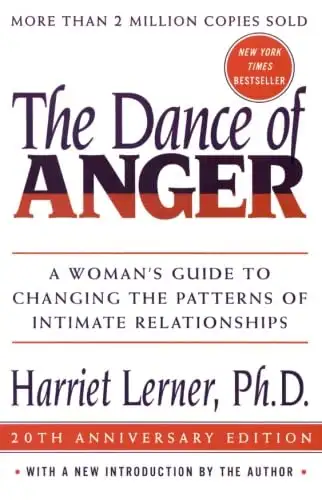
The Dance of Anger: A Woman's Guide to Changing the Patterns of Intimate Relationships
The title says "woman's guide" and it IS written primarily for women in family/intimate relationships.
But the core insight applies to anyone: difficult people pull you into predictable "dances," and you can change the dynamic by changing YOUR steps—without requiring the other person to do anything.
Lerner is a clinical psychologist who uses real case histories and family systems theory to show how your own responses help maintain the patterns you hate. It's uncomfortable. It's also liberating. You stop waiting for THEM to change.
One thing to know: Not the best fit for workplace situations—it's focused on intimate and family relationships.
- How to identify repetitive "anger dances" and pinpoint how your responses keep them going
- How to use anger as information instead of either exploding or numbing out
- How to change your part of the dance so the other person HAS to respond differently
What if I've already tried the 'classic' recommendations like Crucial Conversations and they didn't help my specific situation?
Go to #2 (Difficult Conversations)—it goes deeper into WHY conversations fail, not just what to say. Or try #5 or #8 for a completely different tactical approach.
Are any of these books actually useful when the difficult person has authority over me and I can't just leave?
#1 (Getting Along) is built specifically for this—power dynamics, performance reviews, office politics. It doesn't pretend you can just "walk away."
Which books acknowledge that some people won't change no matter what techniques you use — and help you deal with that reality?
#10 (Dance of Anger) and #9 (Boundaries) both focus on changing YOUR behavior because the other person might never change. That's the honest approach most books avoid.
Is there a book that will help me figure out if I'm actually part of the problem without making me feel like everything is my fault?
#10 (Dance of Anger) and #2 (Difficult Conversations) both help you see your contribution without blame. They're uncomfortable but fair.
Which of these are worth the audiobook version and which should I only read in print?
#1, #3, #7, and #8 are excellent in audio. #2 benefits from being able to flip back and forth.
Look—the difficult person in your life probably isn't going to read a book and suddenly "get it." That's the hard truth. These books help YOU change how you respond, set limits, and protect your sanity when you can't escape the situation.
That's not settling. That's strategy.
If you only do one thing: grab #1 if it's a work situation, #4 if it's family. Both are available on Audible if you're not going to sit down and read. Start there. TAKE ACTION.
KEEP MOVING FORWARD.
More Books on Self-Growth
- 9 Books That Actually Get You Off the Couch (From Someone Who Read Them All While Procrastinating)

- 10 Books for Introverts That Actually Help (Not Just Validation)
- 10 Books That Actually Help Overthinkers (From Someone Who's Read Too Many That Didn't)