8 No-Fluff Mindfulness Books for Skeptical Beginners (2026)
Heads up: some links below are affiliate links. At no extra cost to you, I may earn a small commission if you buy through them.
I was sitting in my car in a parking garage, 20 minutes early to a meeting, doom-scrolling through anxiety tips on my phone while actively having anxiety. The irony wasn't lost on me.
I'd already bought three mindfulness books that year — two were still in the Amazon packaging. The third I'd abandoned on page 47 because the author kept talking about "awakening" like I was supposed to know what that meant.
I've since read all eight books on this list, cover to cover, some of them twice. And here's the thing: they're wildly different from each other.
So instead of pretending one book works for everyone, I'm going to help you find the one that actually fits YOUR situation.
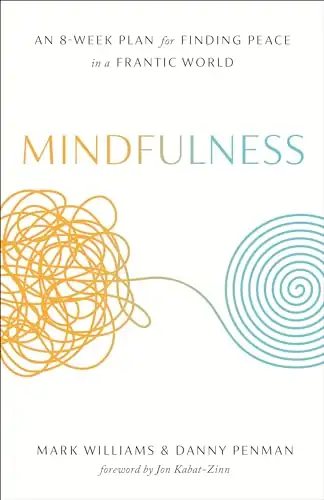
Mindfulness: An Eight-Week Plan for Finding Peace in a Frantic World
This is the book I wish someone had handed me in that parking garage. It's built on Mindfulness-Based Cognitive Therapy (MBCT) — an actual clinical program studied for depression and anxiety relapse prevention.
Not "ancient wisdom meets modern life." CLINICAL. RESEARCH. The eight-week structure means you're not wondering what to do next... you just do week one, then week two. Revolutionary concept, I know.
The limitation is real though: this only works if you DO the practices. Just reading it won't change anything. Which is true of literally every mindfulness book, but this one's honest about it.
One thing to know: If you want purely conceptual understanding without committing to a multi-week practice, this won't be a good fit.
- A concrete 8-week schedule of specific meditations you can plug into your existing routine
- Understanding of how rumination and negative thought loops fuel anxiety — and how mindfulness interrupts them
- The core MBCT practices (body scan, breathing space, mindful movement) used in actual therapy settings
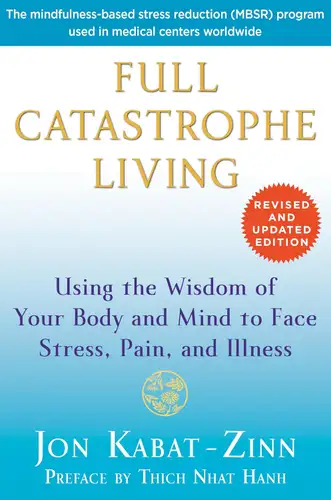
Full Catastrophe Living: Using the Wisdom of Your Body and Mind to Face Stress, Pain, and Illness
Let me be straight with you: this book is 650 pages. That's not a typo.
But.
Jon Kabat-Zinn literally created Mindfulness-Based Stress Reduction (MBSR). This is the manual behind hospital programs at places like UMass Medical Center.
If your stress isn't just annoying but is actually affecting your health — chronic pain, insomnia, high blood pressure, immune issues — this is the gold-standard resource.
It's dense. It asks a lot. But it's also the most comprehensive, medically-grounded mindfulness book ever written. If you're in crisis mode and need something that WORKS, not something that makes you feel good for an afternoon, this is it.
One thing to know: If you want a brief, punchy introduction or are not ready for a longer book that asks for sustained effort, this may feel overwhelming.
- The core practices of MBSR (body scan, sitting meditation, mindful yoga) used in medical centers worldwide
- Deep understanding of how stress affects your body and how attention changes your relationship to pain and fear
- A daily practice framework for relating differently to discomfort during health or life crises
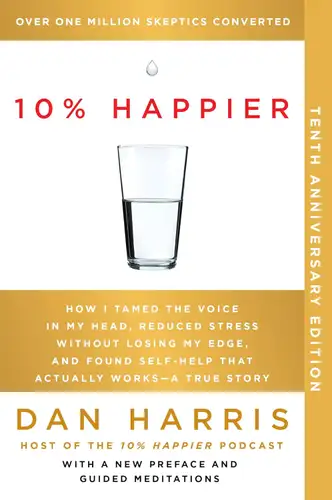
10% Happier: How I Tamed the Voice in My Head, Reduced Stress Without Losing My Edge, and Found Self-Help That Actually Works
Ok, I know what you're thinking. "Another journalist discovers meditation and writes about it. GROUNDBREAKING."
But here's the thing. Dan Harris had a panic attack on live television in front of five million people. Then he spent years investigating meditation with the same skepticism he'd bring to a news story. He interviews neuroscientists.
He goes on retreat and hates it. He meets some legitimate teachers and some total charlatans.
The result is the funniest, most relatable mindfulness book I've ever read. And the title is GENIUS — "10% happier" is such a low bar that your BS detector can't even trigger. No one's promising enlightenment here. Just... a little better.
A little less reactive. A little more able to catch yourself before you say the thing you'll regret.
One thing to know: If you're in acute crisis and need a structured therapeutic program, this is more motivation and context than a primary treatment guide.
- How a driven, competitive professional integrates meditation without losing ambition or edge
- The basic mechanics of mindfulness — attention, awareness, emotional regulation — in plain language
- Realistic expectations: you're not becoming a different person, you're just getting slightly better at not being hijacked by your own thoughts
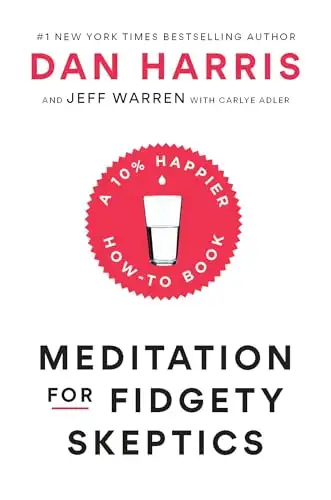
Meditation for Fidgety Skeptics: A 10% Happier How-to Book
If 10% Happier is the "why," this is the "how."
Dan Harris and meditation teacher Jeff Warren literally drove across America in a bus, finding every excuse people use to not meditate — no time, too restless, too skeptical, too busy — and addressing them one by one.
The practices are SHORT. Like, 1-10 minutes short. The tone is funny and self-deprecating. And the audiobook works incredibly well because you can actually DO the practices while listening.
This is the book for people who've convinced themselves they're just "not the meditating type." HECK YES you are. You just needed instructions that don't assume you're already calm.
One thing to know: If you're looking for a deeply therapeutic or spiritual exploration of mindfulness, this will feel too light and pragmatic.
- Multiple short practices (1–10 minutes) you can plug into commutes, lunch breaks, or chaotic days
- Strategies for working with boredom, skepticism, and perfectionism instead of fighting them
- Permission to customize mindfulness to YOUR life rather than retreating to a monastery
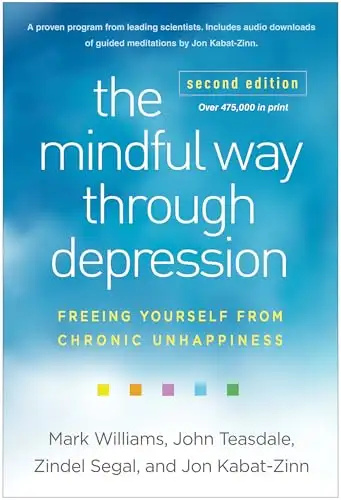
The Mindful Way through Depression: Freeing Yourself from Chronic Unhappiness
This is NOT a "cheer up and think positive" book. It's written by the psychologists who pioneered MBCT specifically to prevent depression relapse. They explain — with real research — why trying to think your way out of depression backfires.
Why rumination is like quicksand. And what actually helps.
If you or someone you care about cycles through low periods that keep coming back, this is the most scientifically grounded resource I know. Many editions include guided audio practices.
One thing to know: It is not a replacement for emergency or intensive mental health treatment if you are in immediate danger or extremely impaired.
- Understanding of how depression thinking patterns trap you — and why "trying harder" makes it worse
- Specific MBCT practices designed to break rumination, self-criticism, and avoidance cycles
- Structured exercises for building a new relationship to mood swings and early warning signs
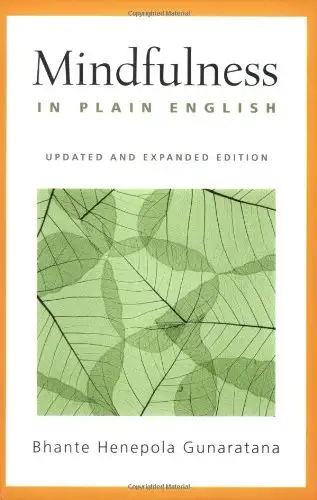
Mindfulness in Plain English
This book is exactly what the title says. Plain English. No stories about the author's transformative experience. No promises about what you'll achieve.
Just: here's how to sit, here's where to put your attention, here's what to do when your mind wanders, here's how to deal with restlessness, doubt, and irritation.
It's written by a Buddhist monk, but don't let that scare you — it's remarkably secular in its practical instructions. Some references feel dated (it was originally published in 1991), but the core teaching is timeless.
This is the one for people who just want to know WHAT TO DO. No fluff. No filler.
One thing to know: If you want stories, motivational anecdotes, or a strong focus on Western clinical research, this will feel dry and traditional.
- Exactly how to set up a basic mindfulness meditation practice, from posture to breath to handling distractions
- Understanding of common challenges like restlessness and doubt — and systematic ways to work with them
- Mindfulness framed as a skill that develops over time, not a mystical experience you either "get" or don't
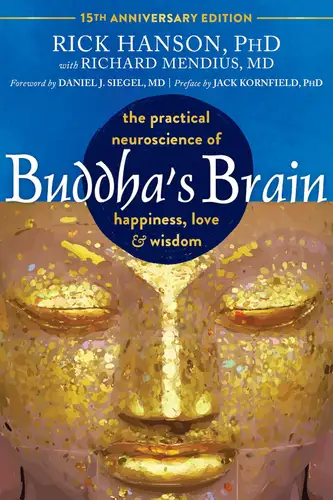
Buddha's Brain: The Practical Neuroscience of Happiness, Love, and Wisdom
If your objection to mindfulness is "show me the research," this is your book.
Rick Hanson is a neuropsychologist, and he explains — in genuinely accessible language — what's happening in your brain when you're stressed, angry, or stuck in negativity.
Then he shows you specific practices that literally change neural pathways over time.
The concept of "taking in the good" — deliberately savoring positive experiences to counteract the brain's negativity bias — is worth the price of the book alone. It's not woo. It's applied neuroscience.
One thing to know: If you're in immediate emotional crisis and need very simple, step-by-step practices, the neuroscience focus may feel indirect.
- How attention, emotion, and memory are shaped by your brain — and how mindfulness tilts them toward calm
- Specific practices for strengthening positive neural patterns instead of reinforcing threat responses
- Understanding of neuroplasticity so you see practice as literally changing your brain, not just "thinking differently"
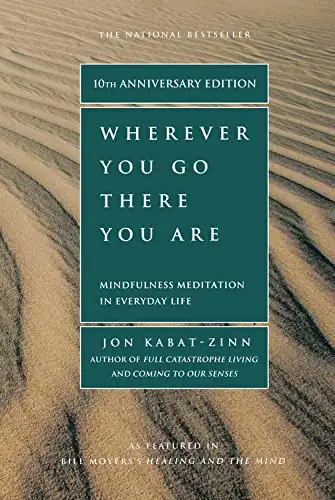
Wherever You Go, There You Are: Mindfulness Meditation in Everyday Life
This is the gift book. Not because it's shallow — Jon Kabat-Zinn literally founded the modern mindfulness movement — but because it's warm, short-chaptered, and doesn't require any prior knowledge or commitment.
You can read one 3-page chapter, put it down, and come back a week later. It's not a program. It's more like... a wise friend you can check in with when things get heavy.
If you're buying for someone who's struggling but might be put off by anything too intense, this is the one.
One thing to know: If you want a systematic therapeutic program with week-by-week instructions, this will feel more like a collection of essays than a course.
- How to bring mindfulness into ordinary activities like walking, eating, and conversations
- Short, standalone practices that don't require long sittings or complex instructions
- A grounded definition: paying attention, on purpose, in the present moment, without judgment
Do I actually need to meditate every day for these books to help, or is there another way in?
#3 and #8 offer perspective shifts that help even without formal practice. But for the real benefits? Yeah, you need to actually do it. #4 makes that easier than any other book here.
What's the shortest book on this list that will give me something useful I can apply this week?
#3 at 256 pages, but #8 is designed to be read in small chunks — you could get value from 15 minutes with it tonight.
Which of these books won't make me feel like a failure if I can't 'clear my mind'?
ALL of them, but especially #4 and #6. Both are explicit that "clearing your mind" isn't the goal — noticing when it wanders is literally the practice working.
Is there a mindfulness book that works for someone whose brain literally won't stop — like diagnosed ADHD, not just busy?
#4. It's called "Meditation for Fidgety Skeptics" for a reason. The practices are short, the tone is forgiving, and it directly addresses the "my brain won't shut up" objection.
If I've already tried two or three popular mindfulness books and they didn't click, which one should I try that's actually different?
#1. It's structured like a clinical program, not a self-help book. The 8-week format removes the "what do I do now?" problem that kills most attempts.
Look — I'm not gonna tell you mindfulness will change your life. That's the kind of promise that's made me skeptical of every self-help list I've ever read.
What I will tell you is this: the right book, matched to YOUR situation, can give you tools that actually work. Not overnight. Not magically. But measurably, over weeks and months.
Pick one book. Start this week. See what happens.
KEEP MOVING FORWARD.
More Books on Self-Growth
- 9 Books That Actually Get You Off the Couch (From Someone Who Read Them All While Procrastinating)
- 10 Books for Introverts That Actually Help (Not Just Validation)
- 10 Books That Actually Help Overthinkers (From Someone Who's Read Too Many That Didn't)