I Read 47 Philosophy Books So You Can Start With the Right One
Heads up: some links below are affiliate links. At no extra cost to you, I may earn a small commission if you buy through them.
I was 34, sitting in a hospital waiting room at 2am, and the only thought I could form was: I don't know how to think about any of this. My dad was in surgery. I'd spent a decade reading business books and 'productivity' content.
And none of it — not a single page of it — had prepared me for sitting with uncertainty and fear and the possibility that everything was about to change. That's when I realized I needed philosophy. Not the Instagram quote kind.
The real kind. I've read these books. Multiple times, in some cases.
And this list covers wildly different needs — the person who wants rigorous arguments, the person in crisis mode right now, the person who just wants something they can listen to during their commute without feeling stupid.
You'll find your fit.

What Does It All Mean? A Very Short Introduction to Philosophy
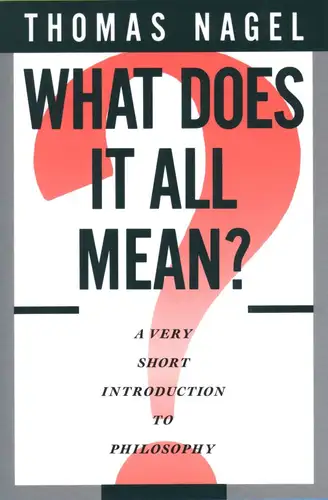
Here's what Nagel does that most 'introduction to philosophy' books completely fail at: he presents actual philosophical problems — knowledge, free will, ethics, death, meaning — in plain language while still being INTELLECTUALLY SERIOUS. He's not dumbing anything down.
He's just... clear. The book is 128 pages. You can read it in a weekend. And when you're done, you'll understand what philosophers mean when they argue about consciousness or moral relativism. You'll have a map.
One thing to know: This won't help if you're in acute crisis looking for guidance on what to DO. It's about understanding questions, not answering them.
- A concrete understanding of what "How do we know anything?" actually means as a philosophical problem
- An appreciation for how your everyday intuitions about ethics and death connect to formal arguments people have been having for centuries
- A mental map so you can choose where to go deeper — ethics, metaphysics, philosophy of mind — based on what genuinely interests YOU
Think: A Compelling Introduction to Philosophy
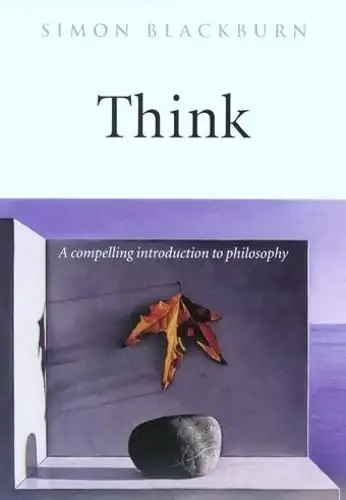
Blackburn teaches you to THINK like a philosopher. Logic, inference, how to spot fallacies, how to assess whether an argument actually holds together.
He covers God, knowledge, mind, freedom, ethics — the big stuff — but he does it with structure and rigor. If Nagel is a conversation, this is a course. And I mean that as a compliment. Some chapters will make your brain hurt.
The chapter on free will made me put the book down and stare at the ceiling for ten minutes.
One thing to know: If you want stories and narratives, look elsewhere. This is conceptual. It's closer to an accessible textbook than to self-help.
- A working grasp of how valid arguments are constructed and how to spot when someone's logic falls apart
- Exposure to central debates in philosophy along with the best-known positions and counterarguments
- A more precise way of talking about "Does God exist?" or "What makes an action right?" without hand-waving
Meditations: A New Translation
This was never meant to be published. It's a Roman emperor's private journal — notes to himself about how to handle mortality, frustration, other people's stupidity, and his own ego.
And here's what gets lost in all the Instagram Stoicism: Marcus was TIRED. He was dealing with war, plague, betrayal, his own failing health. These aren't the thoughts of someone sitting in comfort philosophizing.
They're the thoughts of someone trying to survive with dignity.
The Gregory Hays translation is non-negotiable. Older translations make Marcus sound like a Victorian schoolmaster. Hays makes him sound like a person.
One thing to know: It's fragmentary — these are journal entries, not chapters. It can feel repetitive if you read straight through. Better to dip in and out.
- A framework for focusing on what you can control (your judgments, your actions) versus what you can't (other people, fortune, outcomes)
- Techniques for reframing suffering as an opportunity for growth rather than pure misfortune
- An internal standard for living well that doesn't depend on external success, approval, or comfort
The Consolation of Philosophy
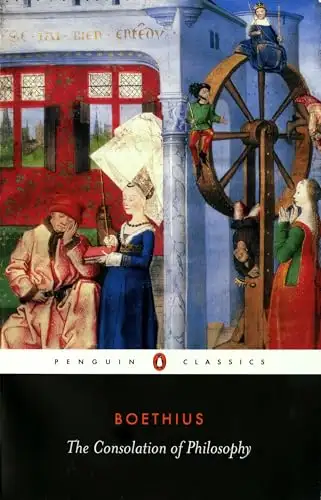
Boethius wrote this in prison, waiting to be executed. Let that sink in.
He'd been a powerful Roman senator, falsely accused of treason, and instead of despair he wrote a dialogue with Lady Philosophy about fortune, suffering, and the good life. It's been a bestseller for 1,500 years. Not because it's academic.
Because it's HUMAN.
The book addresses something most philosophy ignores: what do you do when life betrays you? When you did everything right and still got crushed?
One thing to know: It has a religious and Neoplatonic flavor that may feel dated if you insist on purely secular frameworks. Don't let that stop you.
- A distinction between unstable goods (status, wealth, external success) and more stable internal goods
- A way of thinking about suffering as opportunity for understanding rather than pure punishment
- A perspective on how apparent injustice might fit within a broader conception of meaning
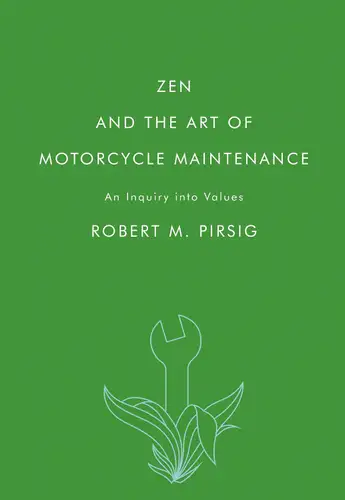
Zen and the Art of Motorcycle Maintenance
Ok, I realize this one is weird. It's a road-trip memoir about a guy riding a motorcycle across America with his son while thinking about... Quality. With a capital Q. And his own mental breakdown.
And the split between rational analysis and direct experience.
But.
It works. Something about the rhythm of the journey and the way Pirsig circles around his ideas — it lodges in your brain. I first read it at 28 and thought it was pretentious. I re-read it at 36 and it wrecked me.
Sometimes a book needs you to be ready.
One thing to know: It's 540 pages and intentionally meandering. If you need tight, efficient argumentation, this will frustrate you.
- An example of how philosophical reflection emerges from ordinary life — maintenance, parenting, travel — not just academic settings
- A lens for seeing the tension between cold rational optimization and lived appreciation
- A treatment of "quality" in work and relationships as a serious philosophical concern
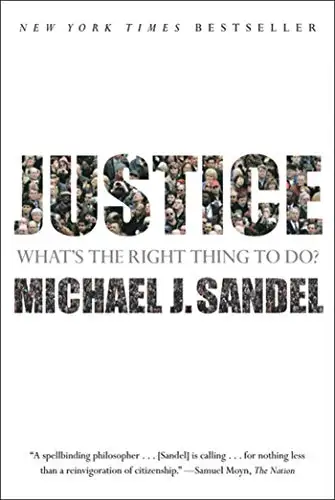
Justice: What's the Right Thing to Do?
Sandel is a Harvard professor whose lectures have been watched by millions. This book reads like those lectures — vivid examples, clear arguments, genuine intellectual drama. Should we have a military draft?
Is price-gouging after a hurricane wrong? What do we owe each other?
He uses real cases to introduce the major ethical theories — utilitarianism, libertarianism, Kantian ethics, Rawlsian justice — and shows where they clash. It's IMMEDIATELY applicable.
You'll start noticing the moral assumptions hiding in everyday political arguments.
One thing to know: Focused on political and moral philosophy. If you want metaphysics or personal existential guidance, it's narrower than you need.
- A grasp of how different theories of justice clash in real policy decisions
- An understanding of the moral assumptions behind everyday political arguments
- Examples of how philosophical reasoning illuminates controversies about inequality, rights, and markets
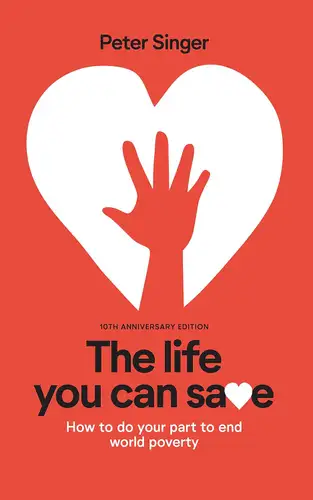
The Life You Can Save
Singer is a philosopher who argues that affluent people have strong obligations to help those in extreme poverty — and he backs it up with data, logic, and uncomfortable analogies.
He asks: if you walked past a drowning child, you'd ruin your clothes to save them. So why don't we give more to save children dying from preventable diseases?
This book will make you uncomfortable. It's supposed to. Singer isn't interested in making you feel good. He's interested in making you THINK honestly about your choices.
One thing to know: This is persuasive philosophy, not neutral exploration. If you prefer descriptive over normative, it may feel confrontational.
- A clear argument for why failing to help distant strangers can be morally comparable to ignoring someone in immediate danger
- An introduction to "effective altruism" — using evidence to maximize the impact of your giving
- Specific guidance on how small sacrifices make large differences to others' well-being

Nicomachean Ethics
This is the big one. Aristotle, 2,300 years ago, systematically working out what it means to live a good life. Not good feelings. Good character. Eudaimonia — usually translated as happiness, but more like 'flourishing.'
He argues that virtue isn't just about following rules. It's about developing habits until doing the right thing becomes second nature.
Is it challenging? Yes. Is it worth it? ABSOLUTELY. This book invented entire fields of thought.
And honestly, it's more practical than most modern self-help because Aristotle understands that change happens through repeated action, not epiphanies.
One thing to know: As an ancient text, it benefits from reading alongside a guide or listening to supplementary lectures. Don't expect it to flow like a modern book.
- A detailed picture of happiness as living in accordance with virtue over a whole life
- An understanding of how habits shape character and why practicing virtues is central to moral growth
- Insight into why friendship and community are essential to flourishing, not optional extras
How do I know if I should start with Stoicism, Existentialism, or something else entirely?
Start with #1. Nagel covers the major areas in 128 pages. THEN you'll know what pulls you — ethics, meaning, knowledge, mind. Don't let Twitter debates choose your first book.
Is there a philosophy book that won't make me feel like an idiot for not understanding it?
#1 and #6 are both designed for intelligent adults with zero background. Nagel and Sandel wrote for curious people, not philosophy majors.
Can philosophy actually help with real problems like my marriage falling apart or hating my job?
Yes, but not like a self-help book promises. #3 and #8 won't give you "5 steps to fix your relationship." They'll change how you THINK about conflict, expectations, and what you actually want — which often matters more.
What's the difference between reading actual philosophers vs. modern books about philosophy?
Modern introductions (#1, #2, #6) explain ideas clearly and save you time. Primary sources (#3, #4, #8) give you the real thing, unfiltered. Both matter. Start with modern, graduate to primary.
If I only have time for one book and I'm genuinely struggling right now?
#3. Meditations. It's survived 2,000 years because it WORKS. Open to any page when you're anxious at 3am. It meets you where you are.
Philosophy isn't about becoming smarter at dinner parties. It's about having a framework when life stops making sense. The best time to build that framework was ten years ago. The second best time is now.
Pick one book from this list — just one — and start this week.
KEEP MOVING FORWARD.
More Books on Self-Growth
- I Read 10 Books About Emotional Intelligence So You'd Only Have to Read One
- 9 Books That Actually Get You Off the Couch (From Someone Who Read Them All While Procrastinating)
- 10 Books for Introverts That Actually Help (Not Just Validation)